Pakistan's Skills Crisis Costs the Economy $31.5 Billion Every Year
The Pakistan skills crisis is costing the economy an estimated $31.5 billion a year, with only 7pc of young people receiving formal training against a regional average of 22pc, Dawn reported.

By News Desk · Verified Pakistan News Desk
Published · 7 min read
A $31.5 billion gap between degrees and jobs
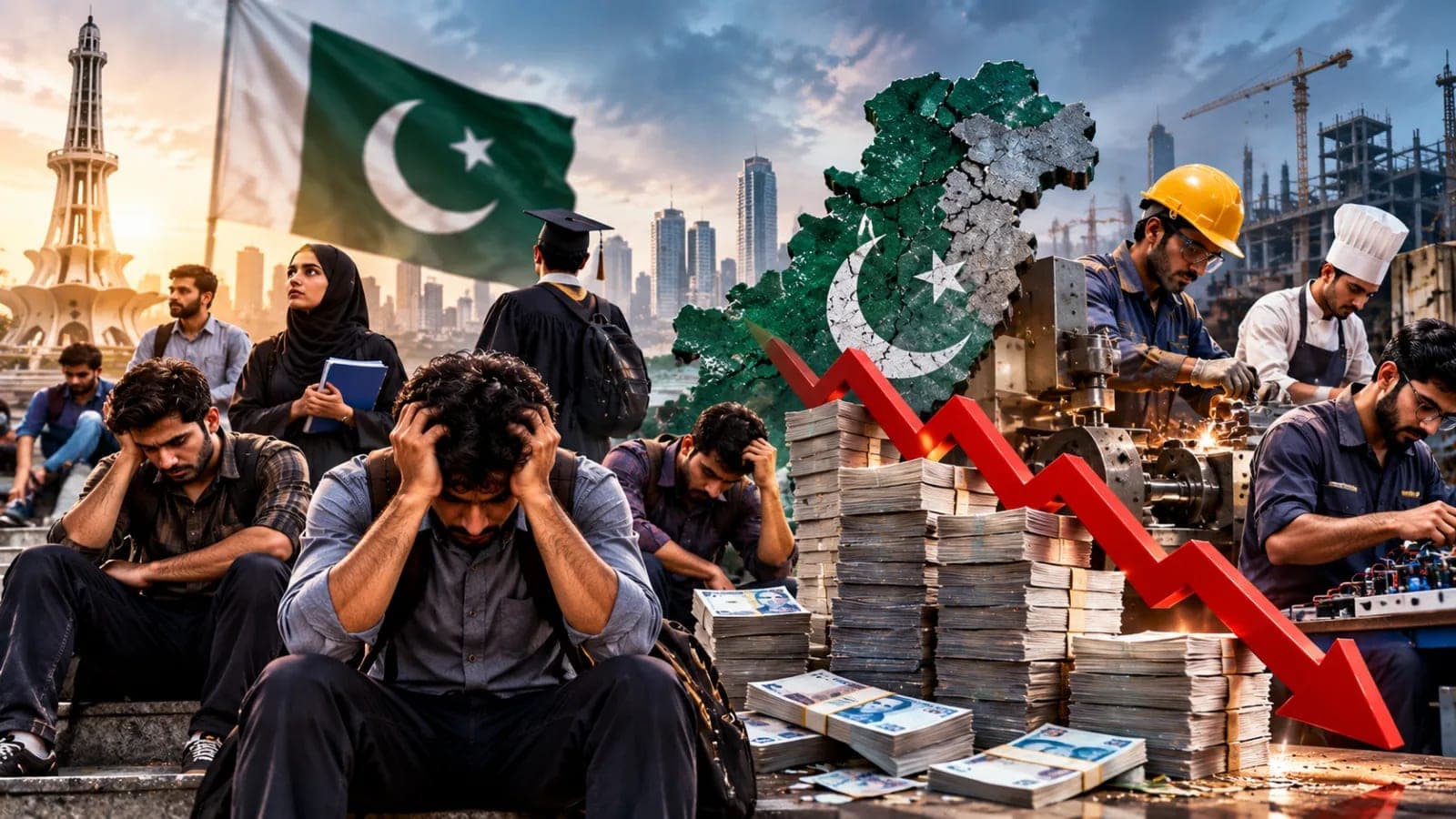
Pakistan is losing an estimated $31.5 billion every year because its young people do not have the skills employers need. That is the stark face of the Pakistan skills crisis. The World Bank puts the cost of this skills gap in lost productivity and unrealised export potential. It is a number that landed with a thud at the World Economic Forum's annual meeting of Global Future Leaders, which opened in Dubai on Tuesday.
The Pakistan case study, titled "How to boost youth employment in Pakistan for the age of AI," holds up the country as a warning example. It shows how fast the distance between classroom learning and workplace demand can grow. Artificial intelligence is changing labour markets everywhere, and Pakistan is entering that transition with one hand tied behind its back.
The problem, according to the case study, is not that young Pakistanis lack talent. It is that the architecture connecting talent to opportunity was never properly built. Structured mentorship, career guidance, industry networks and honest labour market signals are missing across much of the country.
The figure also captures lost exports. Pakistani firms that could sell services abroad struggle to find trained workers at scale. Freelancers and IT exporters compete globally, but the pipeline of job-ready graduates cannot keep pace with demand.
And the cost is not only economic. When educated young people cannot find work, frustration spreads through households and communities. The social cost of idle youth is harder to measure but easy to see.
Only 7pc get formal training, and young women suffer most
Just seven per cent of Pakistani youth have access to formal technical and vocational training. The regional average stands at 22pc. That single comparison explains a great deal about where Pakistan stands next to its neighbours.
The consequences spill into every corner of youth employment. Among Pakistanis aged 15 to 29, nearly one in three is NEET, meaning not in education, employment or training. For young women, the picture is far bleaker. More than half of women in that age group are NEET.
These are not abstract statistics. They describe millions of young people whose days have no structure, no income and no pathway forward. Each one represents talent the economy is failing to use. And the gender gap shows that barriers for young women go well beyond skills alone.
When more than half of young women sit outside education and work, the country loses half its young workforce before it even starts. Cultural norms, transport problems and safety concerns all play a part. Skills policy alone will not fix what access policy ignores.
Rural areas feel the shortage most. Training institutes cluster in big cities while smaller towns have almost nothing. A young person in a remote district may never meet a career counsellor in their life.
Graduate unemployment tells a cruel story
The system punishes the people who played by its rules. Nationally, graduate unemployment stands at 18.3pc, higher than the overall unemployment rate of 14.7pc across all education levels. The harder you study, the harder it seems to find work.
The situation is even sharper among the youngest graduates. According to Gallup Pakistan's analysis of the Pakistan Labour Force Survey 2024-25, unemployment among graduates aged 20 to 24 has reached 32.8pc. Nearly one in three graduates in their early twenties is jobless.
The technology sector shows the mismatch in painful detail. The P@SHA Skills Survey 2025 projects that computer science and IT graduates from HEC-accredited programmes will rise from 28,091 in 2024 to around 62,000 by 2028. But employers are not keeping up. P@SHA member companies recruited only 13,350 fresh graduates out of an estimated pool of 72,952 in 2024. That is an absorption rate of just 18.3pc.
In other words, universities are producing graduates faster than industry can absorb them. A degree has become the beginning of a job search, not the end of one. For families who spent years paying fees, that reality is devastating.
The mismatch feeds a cruel cycle. Students pick popular degrees without knowing what employers want. Universities teach theory while industry needs practical skills. Graduates emerge with certificates but without the workplace readiness firms actually hire for.
The result is visible in hiring data across sectors. Companies report hundreds of applicants per opening yet complain they cannot find suitable candidates. Both sides blame each other while the gap keeps widening.
What Pakistan must fix before the AI era
The World Economic Forum discussion frames the fix as an architectural project, not a motivational one. Young Pakistanis are not failing. The infrastructure they need, mentorship, guidance, networks and reliable job signals, simply does not exist in most of the country.
Building it will mean scaling technical and vocational training well beyond the current seven per cent. It will mean connecting curriculums to what employers actually want. And it will mean special attention to young women, whose NEET rates point to barriers of access, mobility and social expectation.
The AI transition raises the stakes. Countries that bridge the education-employment gap will capture new opportunities. Those that do not will watch their graduates compete for fewer suitable jobs while employers complain they cannot find trained people.
Pakistan has one of the youngest populations in the world. That can be its greatest asset or its heaviest burden. The $31.5 billion price tag shows which way the scales are tipping right now.
The good news is that the diagnosis is now on a global stage. Pakistan's case is being discussed by young leaders from around the world, which brings attention and potentially partnerships. Turning that attention into training centres, apprenticeships and hiring pipelines is the real test.
Time matters. Every graduating class that enters a market without guidance adds to the NEET numbers. Every year of delay makes the $31.5 billion hole deeper. The crisis is structural, which means it can be rebuilt, but only if the work starts now.
Frequently asked questions
How much does the Pakistan skills crisis cost the economy?
The World Bank estimates the cost at about $31.5 billion a year. That covers lost productivity and export potential that never materialises because workers lack the skills employers demand.
What share of Pakistani youth receive formal technical training?
Only seven per cent of young Pakistanis have access to formal technical and vocational training, according to Dawn's reporting. The regional average is 22pc, putting Pakistan far behind its neighbours.
What does NEET mean, and how many young Pakistanis are affected?
NEET stands for not in education, employment or training. Nearly one in three Pakistanis aged 15 to 29 falls into this category. Among young women, the share climbs past half, reflecting deeper barriers to participation.
Why is graduate unemployment so high in Pakistan?
Graduate unemployment stands at 18.3pc nationally, above the overall unemployment rate of 14.7pc. Employers report that degrees do not match workplace needs, while industries absorb only a fraction of graduates, as the P@SHA survey's 18.3pc tech absorption rate shows.
What was discussed about Pakistan at the World Economic Forum meeting?
A Pakistan case study titled "How to boost youth employment in Pakistan for the age of AI" featured at the Global Future Leaders meeting in Dubai. It presents Pakistan as a case study in bridging the gap between education and employment as artificial intelligence reshapes work.
What happens next for education
We will keep this page updated as the story develops rather than publishing a near-duplicate at a new address. Follow Education for related coverage.
Get the Verified Brief
One email each morning with the stories we checked overnight.
Spotted an error? Read our corrections policy and tell the newsroom.