IMF Forecasts 3.5% Growth for Pakistan as Inflation Heads to 9.9%
The IMF Pakistan growth forecast puts GDP expansion at 3.5 percent for FY2026-27, below the government's 4 percent target, while warning that inflation could surge to 9.9 percent this year.

By News Desk · Verified Pakistan News Desk
Published · Updated · 8 min read
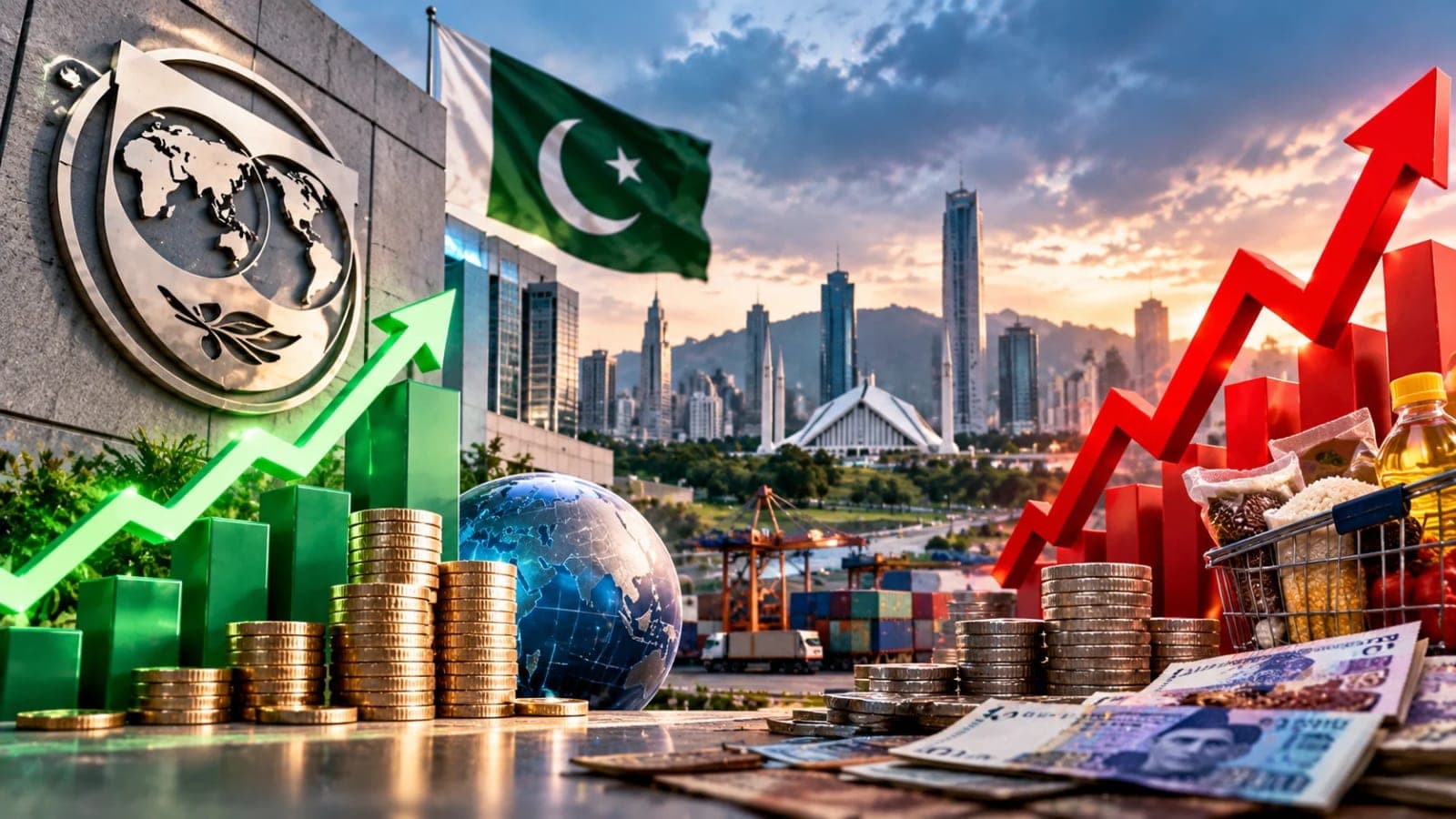
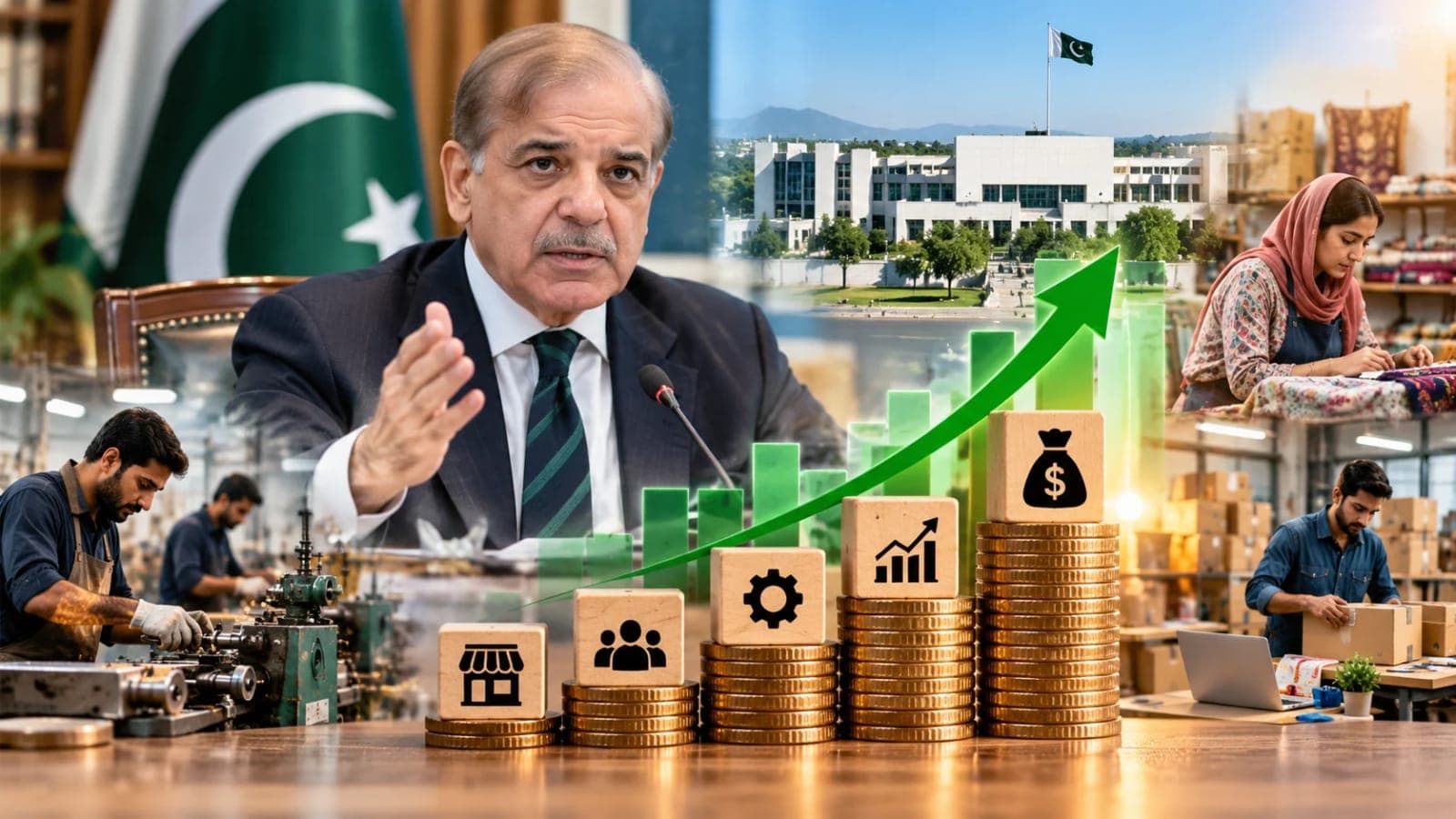
The International Monetary Fund has delivered a cautious verdict on Pakistan's economy. In its latest World Economic Outlook, titled "Resilience Under Strain, Urgent Choices" and released on Tuesday, the Fund projects Pakistan's GDP to grow by 3.5 percent in fiscal year 2026-27. The IMF Pakistan growth forecast falls short of the government's 4 percent target, setting up a difficult year for policymakers.
The headline numbers tell a story of a tougher trade-off ahead. Growth is slowing from last year's pace, inflation is set to accelerate sharply, and the external balance is weakening. Taken together, the Fund's projections leave Islamabad with very little room to maneuver.
IMF Pakistan growth forecast: 3.5% for FY27
Pakistan's projected growth of 3.5 percent for fiscal year 2026-27 comes in below the government's 4 percent target. Business Recorder reported the figure on its front page on October 14, noting that it edges just past the IMF's 3.4 percent forecast for the global economy. But the comparison with India is far less flattering, with Indian growth projected at 7 percent, roughly double Pakistan's pace.
The new projection is also a step down from last year's performance. The Fund estimates Pakistan's economy grew 3.6 percent in fiscal year 2025-26. That means momentum is cooling, not building, at exactly the moment the government wants growth to accelerate toward its official target.
Finance Minister Muhammad Aurangzeb has struck a more optimistic note than the Fund. Dialogue Pakistan reported that he recently told Reuters Pakistan should record growth "north of 4 percent" this fiscal year. The gap between Islamabad's hopes and the Fund's arithmetic is now hard to ignore, and it will likely shape the debate around upcoming economic reviews.
Analysts say the slower pace reflects real constraints on the economy. Pakistan is still working through tight financial conditions, elevated energy costs, and the demands of an IMF-backed stabilization program. When growth falls short of targets, it usually means less tax revenue and less room for development spending, which only makes the fiscal math harder.
Pakistan at a glance, according to the IMF's October report:
- GDP growth: 3.5 percent for FY2026-27, down from 3.6 percent last year
- Inflation: 9.9 percent, up from 7.1 percent and above the 8.2 percent target
- Current account: deficit of 1 percent of GDP, after a 0.5 percent surplus
- Unemployment: 6.5 percent, down from 6.9 percent last year
Inflation set to surge to 9.9%
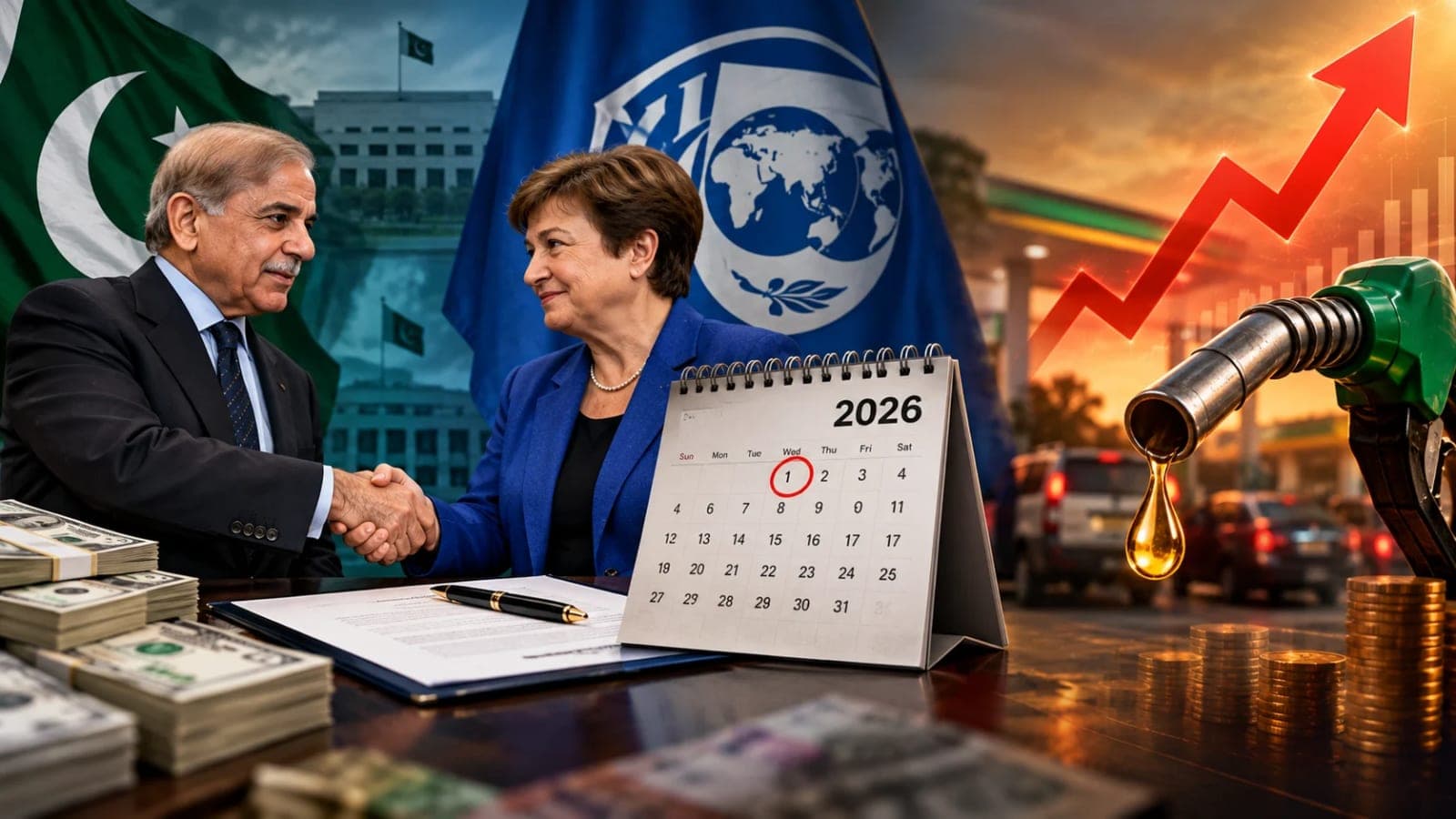
The most alarming number in the report is not growth but inflation. The IMF projects headline inflation to jump to 9.9 percent this fiscal year, up from 7.1 percent in fiscal year 2025-26. That is well above the government's official target of 8.2 percent, a miss that will be felt in every household budget.
The forecast also marks a sharp upward revision. Dialogue Pakistan reported that the Fund raised its inflation estimate from 8.4 percent to 9.9 percent, a jump of 1.5 percentage points from its April outlook, which it had retained in July. When a forecaster revises this far, this fast, the message is clear: price pressures are building faster than anyone expected.
For ordinary Pakistanis, this is the number that bites first and hardest. Rising inflation eats into wages, pushes up food and fuel bills, and makes monthly budgets harder to balance. Families that felt some relief when inflation cooled to 7.1 percent last year may now see those gains slip away.
Businesses face their own squeeze. Higher inflation means higher input costs, trickier pricing decisions, and tighter margins. Companies that import raw materials or energy get hit twice, once by domestic price pressures and once by the weaker external position the report also describes.
Global forces are part of the story. The IMF projects worldwide headline inflation at 4.7 percent in 2026, driven partly by the dragging war in the Middle East and the energy shock it has produced. Energy-importing countries like Pakistan face higher import bills and weaker demand, the report notes, and those pressures feed straight into domestic prices.
Current account swings to deficit, unemployment eases
Pakistan's external position is set to weaken noticeably. The IMF projects the current account to swing to a deficit of 1 percent of GDP in FY2026-27, from a surplus of 0.5 percent in the last fiscal year. Dialogue Pakistan reported that this equals roughly 4.4 billion dollars, about 450 million dollars higher than the Fund's earlier estimate.
A shift from surplus to deficit has real consequences for a country like Pakistan. It means the economy will need more external financing just as price pressures are rising. Pakistan has repeatedly relied on IMF support and bilateral financing to steady its reserves and avoid balance-of-payments stress. A wider gap leaves it more exposed to oil and food price shocks.
There is better news on the jobs front. The Fund projects Pakistan's unemployment rate to decline to 6.5 percent in FY2026-27, down from 6.9 percent last fiscal year and 7.1 percent the year before. Business Recorder carried these figures prominently. The improvement is modest but welcome, suggesting the labor market is slowly stabilizing even as growth cools.
Still, the overall picture is a difficult balancing act. Slower growth, faster inflation, and a wider external gap leave policymakers with little room to ease conditions. The report lands as Pakistan continues implementing economic measures under IMF-supported programs, and its projections will likely frame the next round of policy reviews.
A world split by AI and energy
The Pakistan numbers sit inside a bigger global story. The IMF says the global economy is again proving resilient, but unevenly so and with rapidly narrowing margins of adjustment in the near term. Activity in the first half of 2026 held up better than expected, despite the Middle East war and continuing trade tensions.
The Fund forecasts global growth of 3.1 percent in 2026, a slight uptick from the 3.0 percent it predicted in July, rising to 3.4 percent in 2027. Geo reported that the United States economy is forecast to grow 2.3 percent in both 2026 and 2027. The improvement comes largely from strong investment in artificial intelligence, which has given the technology cycle a powerful demand impulse.
That boom is splitting the world economy in two, the report warns. Countries with favorable terms of trade or technology-related exports get a cushion. The Fund points to AI hardware suppliers like South Korea, Malaysia, Mexico, and Thailand, which is hosting the IMF meetings this week. Energy importers and countries left out of the technology race face inflation, heavy import bills, and fiscal pressures instead.
The Fund's chief economist cautioned that the global economy has been resilient but that resilience is under strain, with risks to growth tilted to the downside. Escalating conflicts, renewed trade tensions, and fiscal vulnerabilities all hang over the outlook. For Pakistan, which sits squarely on the importing side of the energy divide, that warning carries direct relevance.
Frequently asked questions
What is the IMF's GDP growth forecast for Pakistan in FY2026-27?
The IMF projects Pakistan's GDP to grow by 3.5 percent in fiscal year 2026-27, according to its October World Economic Outlook. That sits below the government's 4 percent target and slightly down from the estimated 3.6 percent growth in the previous fiscal year. The report, titled "Resilience Under Strain, Urgent Choices," was released on Tuesday and reported widely in Pakistan on October 14.
Why is the IMF's inflation forecast for Pakistan so high?
The Fund projects inflation to surge to 9.9 percent from 7.1 percent last year, well above the official 8.2 percent target. It raised the estimate by 1.5 percentage points from its April outlook, pointing to price pressures building faster than expected. Global factors also play a role, including energy costs linked to the Middle East conflict and worldwide inflation projected at 4.7 percent.
How does Pakistan's growth compare to India and the world?
Pakistan's projected 3.5 percent growth sits just above the IMF's 3.4 percent forecast for the global economy in the same period. But it trails India sharply, with Indian growth projected at 7 percent. In short, Pakistan is growing slightly faster than the world average but at only half the pace of its regional rival.
What is happening with Pakistan's current account and unemployment?
The current account is projected to swing from a surplus of 0.5 percent of GDP last year to a deficit of 1 percent this fiscal year, worth roughly 4.4 billion dollars. That widens Pakistan's need for external financing at a difficult time. On jobs the news is better: unemployment is expected to decline to 6.5 percent, down from 6.9 percent last year and 7.1 percent the year before.
What does this mean for Pakistan's economy and the IMF program?
The combination of slower growth, higher inflation, and a wider external deficit leaves policymakers with limited room to maneuver. It makes revenue collection harder, debt servicing more expensive, and relief spending tougher to fund. The projections land as Pakistan continues economic measures under IMF-supported programs, so the Fund's numbers will likely shape upcoming policy reviews and targets.
What happens next for business
We will keep this page updated as the story develops rather than publishing a near-duplicate at a new address. Follow Business for related coverage.
Get the Verified Brief
One email each morning with the stories we checked overnight.
Spotted an error? Read our corrections policy and tell the newsroom.