
PM directs banks to simplify SME loan procedures
Prime Minister Shehbaz Sharif has directed banks to simplify SME loan procedures and accept cash flows and export records instead of property as collateral.

By Suleman Mirza · Reporter
Published · Updated · 6 min read
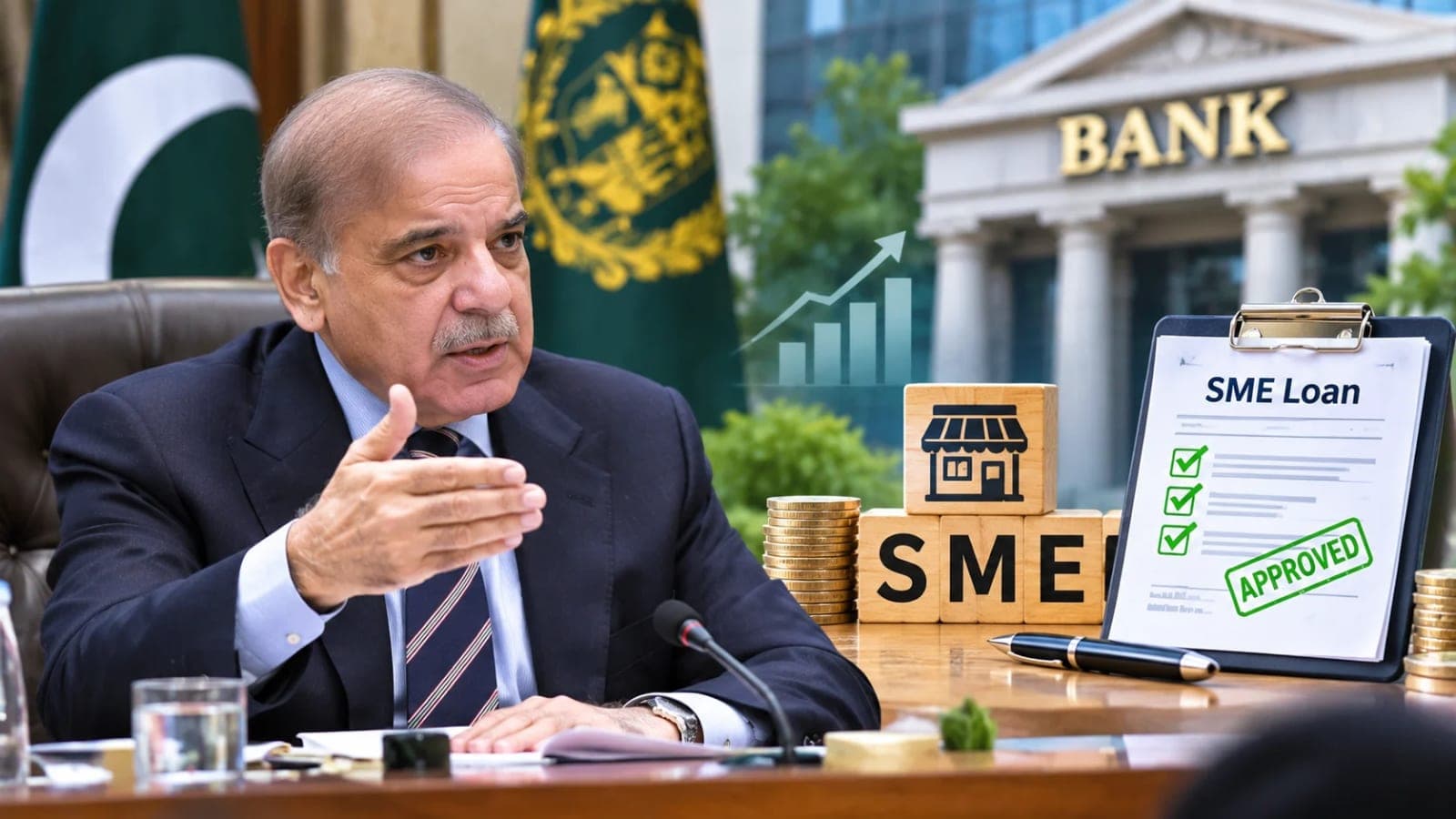
Prime Minister Shehbaz Sharif has told banks to make it easier for small and medium enterprises to borrow money. Chairing a meeting in Islamabad on Friday, 27 November, he directed the authorities to simplify SME loan procedures and give business owners proper guidance when they apply for finance. The prime minister called small businesses the backbone of the economy and said easier credit would bring more economic activity, more jobs and more business opportunities. For years, small business owners in Pakistan have complained that bank loans are hard to get, because the paperwork is long, the conditions are strict, and the most common demand is property as security.
What will change in SME loan procedures
The first direction is about guidance. The prime minister told the relevant authorities to give small businesses effective help in reaching financial resources, preparing business documents and making use of opportunities in the export sector. In practice, that means a business owner walking into a bank should get clear advice on what papers are needed and which loan fits their business, instead of being left to work it out alone.
The second direction is the one most owners will notice. The prime minister called for the process itself to be shortened, so SME loan procedures become simpler and less confusing. No new loan scheme was announced at the meeting, and no interest rate was mentioned. The change, for now, is in how banks handle applications, and the State Bank will have a role in turning the directions into working rules.
Cash flow and export records can count as collateral
The most practical change in SME loan procedures came on collateral. The prime minister directed that a small firm's export data available through the Pakistan Single Window should be accepted as an alternative form of security for a bank loan. The same applies to firms in supply chains through Exim Insurance and digital invoicing, whose records can now stand in place of the property papers banks usually ask for.
He also directed banks to treat a business's cash flow as an alternative measure of creditworthiness. That matters because a healthy cash flow shows a business is earning and can repay, even when it has little property to offer.
Banks to get government data and a review of lending rules
The prime minister also called for a review of the prudential regulations governing bank lending to small businesses. These are the State Bank rules that set how banks judge risk, how much they can lend and what security they must take. A review of the rules behind SME loan procedures could remove some of the conditions that make small loans slow and costly to process, though the details will only be clear once the State Bank acts.
Banks will also get access to relevant government data, so they can check a borrower faster and decide sooner. The prime minister said banks should help small businesses not only with loans but also with letters of credit and bank guarantees for trade. Banks that meet their SME lending targets will be encouraged and rewarded, he added.
The Rs2 trillion target for June 2028
The meeting was told that banks are strengthening their institutional capacity to lend more to small businesses. The banks committed to providing Rs2 trillion in loans to SMEs by June 2028 and raising the number of SME borrowers to 775,000. That target includes Rs886 billion in new loans and facilities for 449,000 new borrowers, and it shows how much rides on simpler SME loan procedures.
In October, the prime minister directed the authorities to raise SME financing from Rs1.1 trillion to Rs2.2 trillion by 2028. Last week, he approved facilitation centres for SMEs at the district level, with pilot projects in Lahore, Peshawar, Karachi and Quetta. Readers who want the background can see our earlier report on the SME financing target of Rs2.2 trillion by 2028.
What this means if you run a small business
If you own a small business, the directions are good news, but they are not yet a new rulebook. The practical step is to get your records in order now, so you are ready when banks start applying the new SME loan procedures. Keep your bank statements clean and your sales and purchase invoices in one place, and if you export, make sure your shipments and payments are recorded through the proper channels.
If your business already uses digital invoicing or works with an exporter, ask your bank how those records can support your next loan application. Small businesses can also use the SBP SMEConnect portal to find financing options, and our SME loan application guide explains the documents banks usually ask for.
What happens next
The next steps sit with the State Bank and the banks. The review of prudential regulations has to produce new guidance before SME loan procedures change on the ground, and banks have to adjust their own credit policies to accept cash flow and digital records. Business owners should watch for a State Bank circular or an announcement from their own bank in the coming weeks.
Frequently asked questions
Will banks now lend without any collateral?
No. The prime minister directed that cash flow and export records be treated as an alternative form of collateral, not that security is abolished. Banks will still assess risk, but steady earnings or a proven export record will give a business more ways to qualify.
How will the new SME loan procedures help exporters?
Exporters whose data is available through the Pakistan Single Window, or who are in supply chains through Exim Insurance and digital invoicing, can have those records accepted in place of property papers. That helps small exporters with confirmed orders but little property to pledge.
When will the changes take effect?
No date was announced. The changes depend on the State Bank's review and on banks updating their own procedures, so owners should check with their bank rather than assume the new rules are in force.
What happens next for business
We will keep this page updated as the story develops rather than publishing a near-duplicate at a new address. Follow Business for related coverage.
Get the Verified Brief
One email each morning with the stories we checked overnight.
Spotted an error? Read our corrections policy and tell the newsroom.