PM Orders SME Financing Doubled to Rs2.2 Trillion by 2028
A new SME financing Pakistan plan doubles the target to Rs2.2 trillion by 2028, with borrowers rising from 324,000 to 775,000, after a directive from PM Shehbaz Sharif.

By News Desk · Verified Pakistan News Desk
Published · Updated · 5 min read
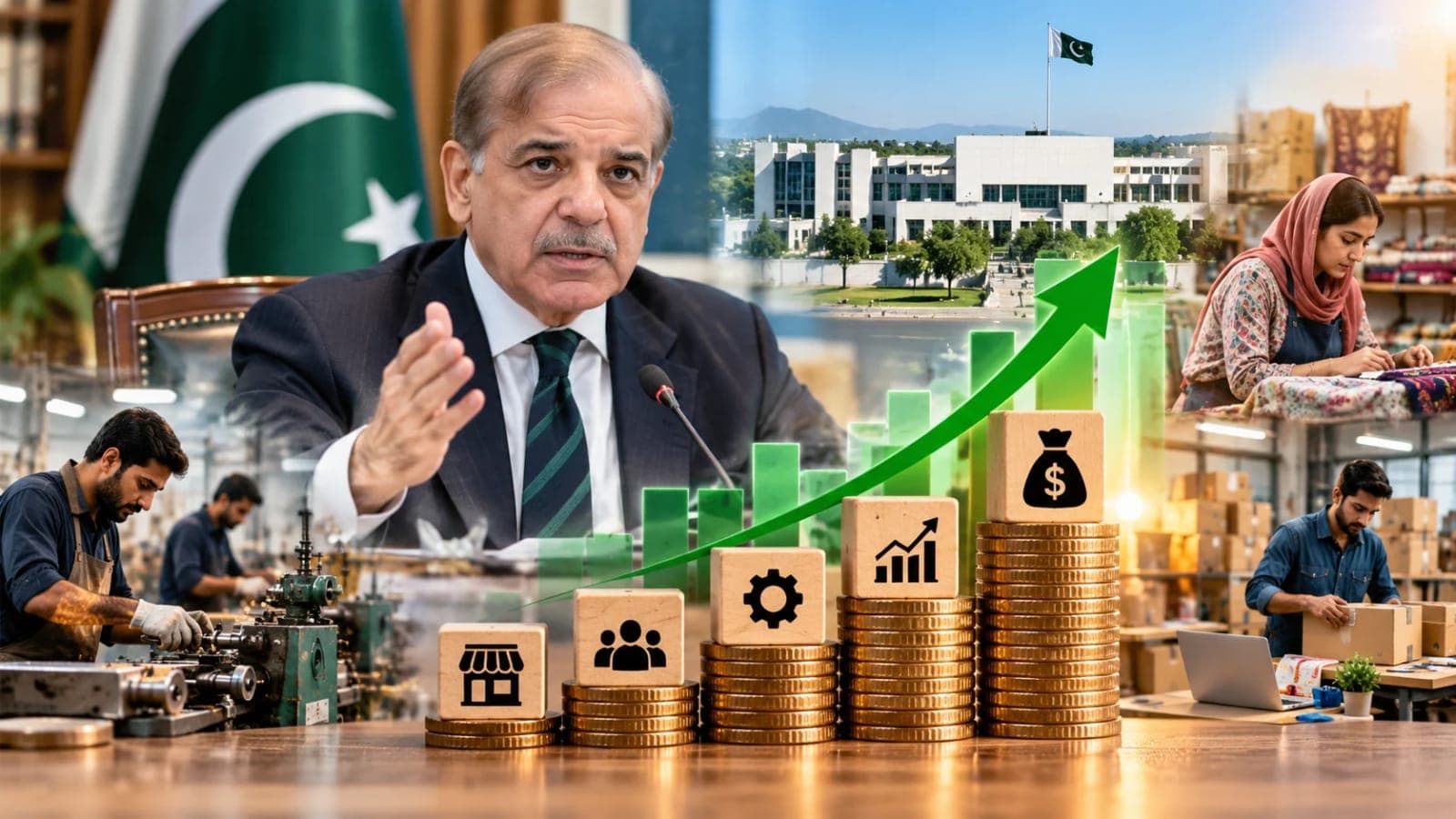
A new SME financing Pakistan drive will double bank lending to small and medium enterprises by 2028. Prime Minister Shehbaz Sharif issued the directive while chairing a meeting on the Small and Medium Enterprises Development Authority, SMEDA, in Islamabad on 12 October 2026.
PM Shehbaz Sharif has ordered SME financing doubled to Rs2.2 trillion by 2028, up from Rs1.1 trillion. The baseline stood at Rs1.15 trillion in June 2026, according to figures shared at the meeting.
The new target supersedes an earlier goal of Rs2 trillion by June 2028. The government has raised both the amount and the ambition in one move.
The directive in detail
The prime minister set out a full set of targets, not just a headline number. Borrower numbers, the SME share of bank lending and bank performance will all be tracked against the 2028 deadline.
From Rs1.1 trillion to Rs2.2 trillion
Financing to SMEs is to rise from Rs1.1 trillion to Rs2.2 trillion by 2028. That means roughly doubling the flow of bank credit to small businesses within about two years.
The government sees bank lending as the main channel for this growth. Most SMEs in Pakistan still rely on informal credit or their own savings, which limits how fast they can expand and hire.
More borrowers and a bigger bank share
The number of SME borrowers is to climb from 324,000 to 775,000. At the same time, the SME share of total bank lending is to rise from 9.9 percent to 13 percent.
Banks will face new incentives to lend. An annual special award will go to the bank with the highest SME financing, and a performance scoring system will rank banks on their SME lending record.
A new three-tier governance system
To make sure the targets are met, the prime minister approved a three-tier Access to Finance governance structure. The design puts the plan under direct political oversight from the top.
Who heads what
The prime minister himself will head a high-level committee on SME finance. The finance minister will chair a steering committee, with the State Bank governor serving as co-chair.
This puts the country's top economic decision makers in the same room. The signal to banks and ministries is that SME lending is now a national priority, not a side project.
Sectoral sub-committees
Below the steering committee will sit sectoral sub-committees. These will cover SMEs, agriculture, information technology, renewable energy and housing.
Each sector has its own financing bottlenecks. Dedicated sub-committees are meant to find sector-specific fixes instead of one-size-fits-all rules handed down from above.
What changes on the ground for SMEs
The meeting also approved a package of SMEDA reforms aimed at the borrower's experience. The focus is on language, awareness and simpler digital access for small firms.
Local languages, awareness and an AI helpline
SMEDA will prepare sector feasibility studies in local languages so owners can actually use them. A nationwide awareness strategy will explain financing options to small business owners in plain terms.
An AI-powered helpline in local languages is also planned, alongside reforms to SMEDA's digital portal. The idea is to cut the paperwork and confusion that keep small firms away from banks, a problem the Dawn report on the meeting highlighted.
The Alibaba training deal
An MoU with Alibaba will train 10,000 SMEs over two years. The programme is expected to help small firms sell online and reach export markets they could not access before.
E-commerce is a natural fit for Pakistan's small manufacturers and traders. Training on digital selling could open doors that bank credit alone cannot.
Why it matters for jobs and migration
The prime minister stressed that SME growth must reach beyond the big cities. Special attention will go to underdeveloped areas where jobs are scarcest.
Focus on underdeveloped areas
Financing small businesses in poorer districts can create local jobs and slow the drift of workers to overcrowded cities. Reducing urban migration was named as an explicit goal of the plan.
Economists have long argued that Pakistan's growth is too concentrated in a few urban centres. Spreading credit to smaller towns could make growth both faster and fairer.
Business community welcomes the move
The Lahore Chamber of Commerce and Industry, LCCI, welcomed the financing target. Business leaders have complained for years that banks prefer lending to the government and large corporates over small firms.
Whether the welcome turns into results will depend on implementation. Targets are easy to announce. Getting credit to a small workshop in a remote district is the hard part, as ProPakistani's coverage of the announcement notes.
Frequently asked questions
What did the prime minister direct?
At a SMEDA meeting in Islamabad on 12 October 2026, PM Shehbaz Sharif directed that SME financing be doubled from Rs1.1 trillion to Rs2.2 trillion by 2028. He also set targets for borrowers, the bank lending share and bank performance incentives.
What is the current level of SME financing?
The baseline stood at Rs1.15 trillion in June 2026. The earlier target of Rs2 trillion by June 2028 has been superseded by the new Rs2.2 trillion goal.
How many borrowers are expected to benefit?
The number of SME borrowers is targeted to rise from 324,000 to 775,000. The SME share of total bank lending is to increase from 9.9 percent to 13 percent over the same period.
What is the three-tier governance system?
The prime minister heads a high-level committee, the finance minister chairs a steering committee with the SBP governor as co-chair, and sectoral sub-committees cover SMEs, agriculture, IT, renewable energy and housing. The three-tier design is meant to keep the 2028 targets on track.
How will small businesses get help in their own language?
SMEDA will publish sector feasibility studies in local languages, run a nationwide awareness strategy and launch an AI-powered helpline in local languages. An MoU with Alibaba will also train 10,000 SMEs over two years.
What happens next for business
We will keep this page updated as the story develops rather than publishing a near-duplicate at a new address. Follow Business for related coverage.
Get the Verified Brief
One email each morning with the stories we checked overnight.
Spotted an error? Read our corrections policy and tell the newsroom.