
Saudi Loan Rollover: Pakistan Secures $3 Billion Extension
The Saudi loan has been rolled over, Finance Minister Muhammad Aurangzeb confirmed, with the $3 billion deposit extended for a reasonable period.

By News Desk · Verified Pakistan News Desk
Published · Updated · 5 min read
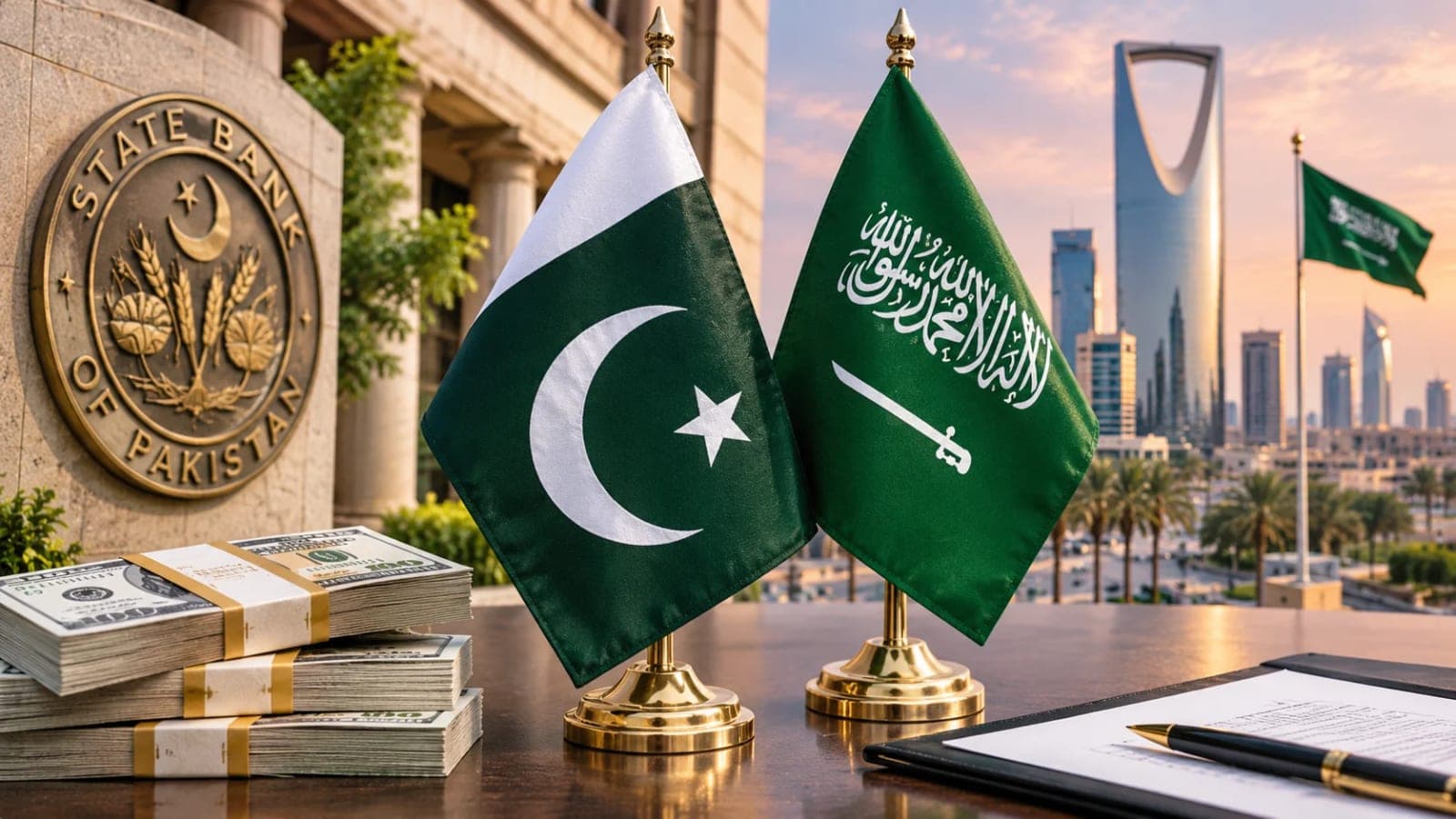
The Saudi loan has been rolled over, Finance Minister Muhammad Aurangzeb confirmed on Wednesday, giving Pakistan breathing room on its external payments at a crucial moment.
Aurangzeb told reporters at Parliament House that Riyadh had extended the $3 billion additional deposit it provided to Pakistan in April this year. The Saudi loan had matured on October 31 under its three-month term, and the finance minister confirmed that its tenure has now been extended.
"Yes, its term has been extended," Aurangzeb said when asked whether the additional Saudi deposit of $3 billion had been rolled over. "It has been extended for a reasonable period." He did not disclose the new maturity date, adding: "You don't need to worry as to for how long given the kind of strategic relationship we have."
Aurangzeb also made clear that Pakistan does not require any additional financing from Saudi Arabia at present. The Saudi loan rollover, he said, was enough for now, and the country could meet its external financing requirements even without a proposed $10 billion liquidity facility from the United States.
Saudi loan: why the rollover matters
The Saudi loan matters because it directly supports Pakistan's foreign exchange reserves. The $3 billion deposit, agreed in April, was provided to bridge a gap arising from $3.5 billion in repayments to the United Arab Emirates. Without the rollover, Pakistan would have had to repay the deposit at a time when it is still rebuilding its external buffers.
Pakistan's foreign exchange reserves stood at approximately $21.5 billion at the end of September, according to the finance minister, providing around three months of import cover. The Saudi loan extension helps keep that buffer intact while the government manages a heavy schedule of external debt repayments.
Saudi Arabia's support for Pakistan is now worth $8 billion in total. Alongside the $3 billion deposit rolled over this week, Riyadh had already extended a separate $5 billion facility until 2028. Aurangzeb said he had a very good meeting with his Saudi counterpart, Mohammed Al-Jadaan, during the recent World Bank and IMF meetings in Bangkok, where the extension was discussed.
The proposed $10 billion US facility, meanwhile, appears less central than it once did. Aurangzeb said Islamabad had submitted its request in July, when the government was seeking access to international capital markets. Pakistan subsequently raised $3 billion from international markets in the first week of September, attracting an order book of $6 billion, which reduced the urgency of the US facility.
Saudi loan: what happens next with the IMF
The Saudi loan rollover comes just ahead of a key date in Pakistan's IMF programme. Aurangzeb confirmed that the IMF Executive Board is expected to review Pakistan's $7 billion programme in December this year, without specifying a date. The board meeting would approve a disbursement of $1.2 billion to Pakistan.
Pakistan and the IMF reached a staff-level agreement on October 8, 2026, following the fourth review of the Extended Fund Facility and the third review of the Resilience and Sustainability Facility. That agreement could unlock approximately $1.2 billion in additional financing, subject to approval by the IMF Executive Board.
The finance minister also set out the scale of the repayment challenge ahead. Pakistan must pay roughly 1.5 billion euros each year on Eurobonds, and the government is restructuring its borrowing maturities to avoid large repayments falling due in a single year. That matters because another $5 billion in Saudi financing is scheduled to mature in December 2028, and the government wants no single year to carry an unmanageable repayment burden.
As part of that effort, Aurangzeb cited a new Eurobond with a maturity of five and a half years, spreading repayments over a longer period.
For ordinary Pakistanis, the Saudi loan rollover does not change daily life directly, but it removes a near-term risk. A repayment crunch would have put pressure on reserves and, in turn, on the currency and on import prices. The extension, combined with the expected IMF disbursement in December, gives the government a steadier path through the end of the year.
Saudi loan: frequently asked questions
What is the Saudi loan rollover? It is the extension of Saudi Arabia's additional $3 billion deposit to Pakistan, which matured on October 31. Finance Minister Muhammad Aurangzeb confirmed the Saudi loan has been rolled over for a reasonable period.
How long is the Saudi loan extended for? Aurangzeb did not disclose a new maturity date, saying only that the Saudi loan has been extended for a reasonable period, given the strategic relationship between the two countries.
Does Pakistan need more Saudi help? No, according to Aurangzeb. He said Pakistan does not require any additional financing from Saudi Arabia at present and can meet its external financing requirements.
When will the IMF review Pakistan's programme? The IMF Executive Board is expected to review Pakistan's $7 billion programme in December 2026, which could approve a $1.2 billion disbursement.
How much Saudi financing does Pakistan have in total? Saudi Arabia has provided $8 billion in total: the $3 billion deposit rolled over this week and a separate $5 billion facility already extended until 2028.
What happens next for business
We will keep this page updated as the story develops rather than publishing a near-duplicate at a new address. Follow Business for related coverage.
Get the Verified Brief
One email each morning with the stories we checked overnight.
Spotted an error? Read our corrections policy and tell the newsroom.