
Third US Aircraft Carrier Joins Iran Blockade Force
A third US aircraft carrier group has entered the Middle East, joining two others enforcing the blockade of Iranian ports as tensions stay high.

By Suleman Mirza · Reporter
Published · Updated · 4 min read
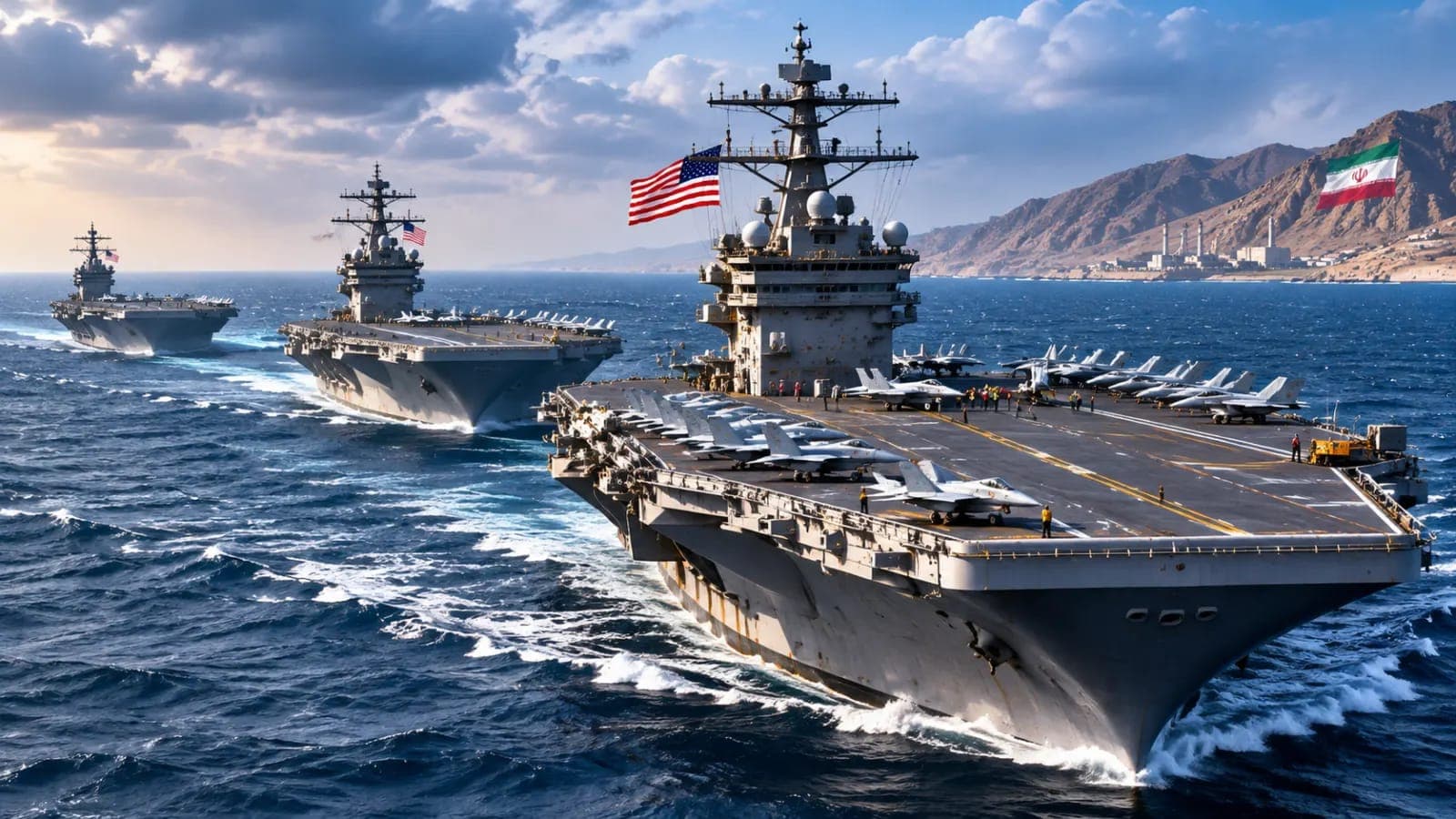
A third US aircraft carrier strike group has entered the Middle East, a US official said, in the biggest American naval buildup in the region since April.
The USS Theodore Roosevelt carrier strike group crossed into the US Central Command area of operations on Sunday, the official told ABC News. It joins the USS George H.W. Bush and the USS George Washington, which have been operating in the Arabian Sea.
More than 20 warships enforce the blockade
The three groups are part of a deployment of more than 20 US Navy vessels enforcing the blockade of Iranian ports, which Washington imposed on 13 April after nuclear negotiations collapsed. Each US aircraft carrier sails with cruisers, destroyers and an air wing of dozens of jets, so the force now in the region carries very large firepower.
The war between the United States, Israel and Iran began on 28 February, and the blockade has become the main tool of pressure on Tehran's oil income.
First three-carrier force since April
Three US aircraft carrier groups operated together in the region in April this year, the first time that had happened since the 2003 Iraq War. Whether the Roosevelt is reinforcing the force or replacing one of the two carriers already there is not yet clear.
A report by Stars and Stripes on 9 November said the plan was undecided, and an assessment by Israel's Institute for National Security Studies on 15 November also raised the possibility of a rotation rather than a permanent three-carrier deployment.
The Roosevelt's long journey to the Gulf
The Theodore Roosevelt left San Diego on 27 September with about 5,000 sailors in its strike group. It made a port call in Singapore in early November and sailed through the Strait of Malacca on 9 November before heading across the Indian Ocean.
Its arrival comes in the same week that President Donald Trump travels to Asia for the APEC forum in Shenzhen, where he is due to meet China's Xi Jinping and Russia's Vladimir Putin on 19 November with Iran on the agenda. A bigger US aircraft carrier presence gives Washington more weight in those talks.
What it means for the region
For Gulf states and for Pakistan, the buildup is a double signal. It deters further Iranian attacks on shipping, but it also means any new clash near the Strait of Hormuz would involve a much larger American force than at any point since April.
Officials have not said how long all three groups will stay. For now, the US aircraft carrier force off Iran is at its strongest in seven months.
Frequently asked questions
Q: Which US aircraft carrier groups are in the Middle East now? A: Three: the USS Theodore Roosevelt, the USS George H.W. Bush and the USS George Washington, supported by more than 20 US Navy vessels in total.
Q: Why has the US sent a third carrier? A: The third US aircraft carrier group strengthens the blockade of Iranian ports and adds air power as the war with Iran continues, though officials have not ruled out that it may partly be a rotation.
Q: When did three US carriers last operate together in the region? A: In April 2026, which was the first three-carrier concentration in the region since the 2003 Iraq War.
Q: Is the third carrier replacing one of the others? A: That is not confirmed. US reports since 9 November have said the USS Theodore Roosevelt might reinforce the force or allow one US aircraft carrier group to rotate home.
Q: Does a bigger carrier force mean new strikes on Iran are coming? A: Not necessarily. Officials describe the deployment as blockade enforcement and deterrence, and no new strike operation has been announced.
What happens next for global
We will keep this page updated as the story develops rather than publishing a near-duplicate at a new address. Follow Global for related coverage.
Get the Verified Brief
One email each morning with the stories we checked overnight.
Spotted an error? Read our corrections policy and tell the newsroom.