
Used Car Imports Surge to 2,276 in September as Local Industry Fights Back
Used car imports Pakistan hit 2,276 in September, and parts makers say that meant a Rs3.4 billion loss of local parts production.

By News Desk · Verified Pakistan News Desk
Published · 8 min read
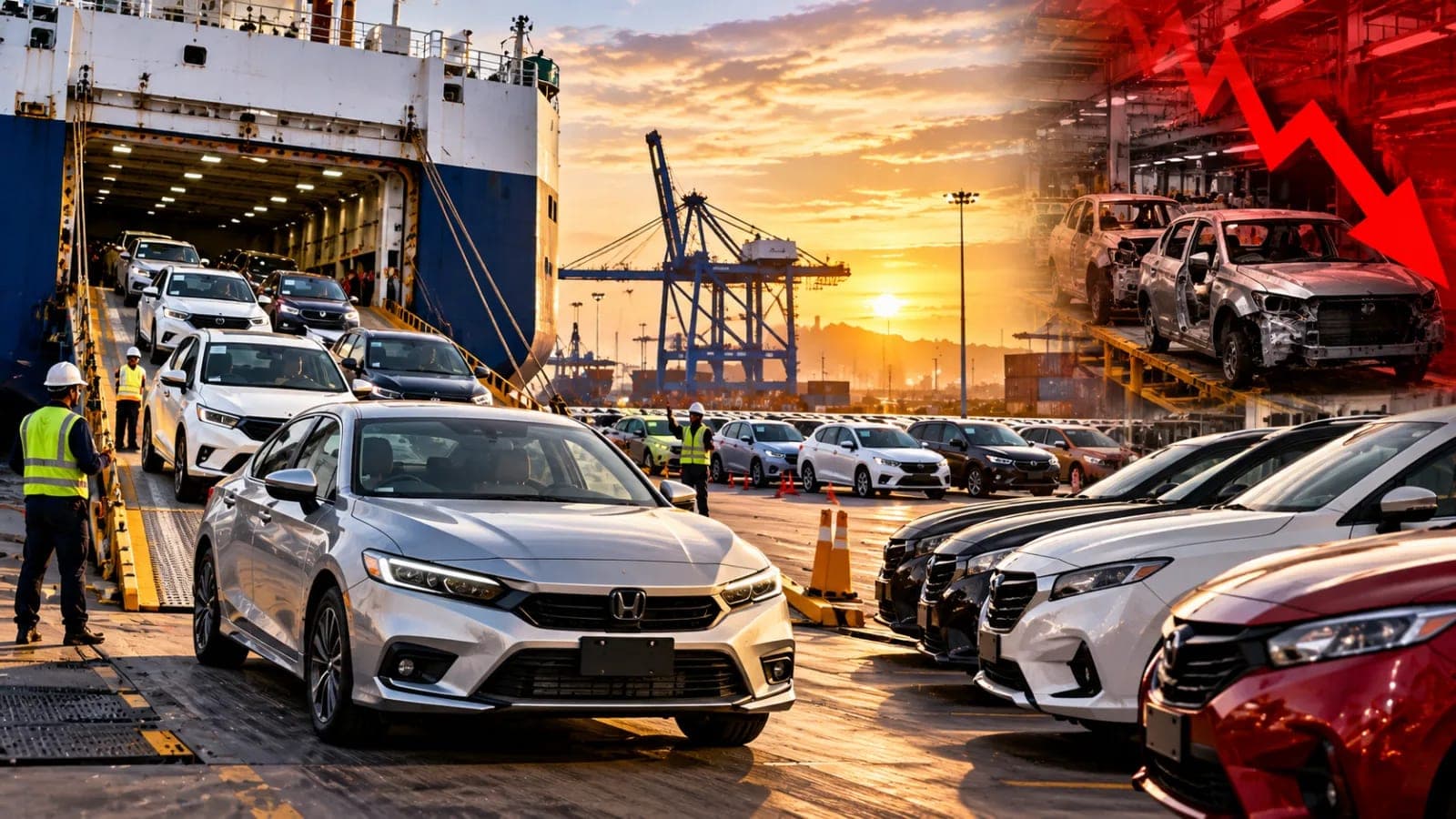
The used car imports Pakistan story has taken a dramatic new turn. Pakistan imported 2,276 used vehicles in September 2026, the highest monthly figure this year, and local manufacturers say the surge is happening at their expense. Used car imports Pakistan hit 2,276 in September, and parts makers say that meant a Rs3.4 billion loss of local parts production.
The numbers come from Commerce Ministry data reported by Dawn. What makes September's figure striking is not just the volume but the speed of the rebound. Barely four months ago, in May, only 48 used vehicles entered the country. Now the gates are open again, and the fight between importers and local manufacturers is heating up.
Two battles are playing out at once. On one side, auto parts makers are demanding an urgent meeting with Prime Minister Shehbaz Sharif over the draft Auto and Auto Parts Policy 2026-31, which they fear will open the floodgates further. On the other, car importers insist everything they do is legal, inspected and good for consumers. Here is what both sides are saying, and why it matters for anyone planning to buy a car.
Used Car Imports Pakistan: The September Surge in Numbers
The monthly trend tells the whole story. In May 2026, Pakistan imported just 48 used vehicles, mostly through the Personal Baggage Scheme. Then everything changed. In June, the figure jumped to 843 vehicles, including 806 under the Gift Scheme, after the government granted a one-off waiver of pre-shipment inspection. July brought 1,938 vehicles, with 1,876 under the Gift Scheme. August dipped to 1,445. Then September surged again to 2,276, of which 2,238 came through the Gift Scheme, according to Commerce Ministry data cited by Dawn (https://www.dawn.com/news/2034516).
That is roughly a 58 percent jump from August to September, as noted by PakWheels (https://www.pakwheels.com/blog/used-car-imports-pakistan-september-2026/). The rebound is especially remarkable because the government abolished the Personal Baggage Scheme earlier this year and tightened rules to stop misuse of overseas Pakistanis' vehicle import facilities. The crackdown worked briefly. Then the Gift Scheme took over as the main channel.
Rules have also been quietly eased. A September 30 notification from the Engineering Development Board removed the minimum capital requirement for importing companies, so any tax-registered individual or firm can now import used vehicles without being registered with the SECP. The inspection mechanism has shifted from the EDB to the Pakistan Standards and Quality Control Authority, with inspections carried out through PSQCA-registered agencies (https://bloompakistan.com/used-car-imports-pakistan-surge-september-2026/).
A senior auto industry executive told Dawn that the 20 to 25 percent reduction in duties on completely built units in the 2026-27 budget has lowered import costs. The executive added that reports suggest the one-year restriction on transfer of ownership is not being implemented in some cities, which is helping the business flourish again. That business, the executive said, is growing at the cost of a domestic industry made up of 13 assemblers and more than 300 auto parts manufacturers.
Why Local Manufacturers Are Angry
The anger from local manufacturers is not abstract. It comes with a price tag. Pakistan Association of Automotive Parts and Accessories Manufacturers (PAAPAM) Chairman Abdul Rehman Aizaz told Dawn that locally produced cars contain up to 60 percent local parts by value, worth an average of Rs1.5 million per vehicle. By that math, September's import of 2,276 used vehicles meant a loss of Rs3.4 billion in local parts production, the kind of production that creates jobs and operates in the documented economy.
Auto parts vendors say the timing could not be worse. After a gap of three years, local auto production had finally started to increase, contributing to growth in Pakistan's large-scale manufacturing sector. The import surge, they argue, threatens to choke that recovery before it gains momentum.
Aizaz went further than numbers. He called it unfair that the proposed auto policy slashes import duties on new cars while used car imports are being encouraged at the same time. He described the used car business as completely unregulated and warned that Pakistan is moving toward a market dominated by imported new and used vehicles, with no industrial activity left behind. That is a grim picture for an industry that has spent decades building local engineering capacity.
The vendors' case rests on a simple argument. Every used car imported is one less car assembled locally, and each locally assembled car carries about Rs1.5 million worth of Pakistani-made parts. Those parts support factory jobs, local suppliers, and tax-paying businesses. Imported cars, they say, support none of that.
The Auto Policy 2026-31 Fight: PAAPAM's Urgent Meeting Request
The import surge has collided with a much bigger policy battle. PAAPAM has formally approached Prime Minister Shehbaz Sharif, seeking an urgent meeting to present the industry's concerns and proposals on the draft Auto and Auto Parts Policy 2026-31, Dawn reported (https://www.dawn.com/news/2034533).
In its communication, the association acknowledged the prime minister's directive under which a high-level committee is conducting a clause-by-clause review of the draft policy. PAAPAM welcomed the review but warned that finalising the policy without meaningful industry consultation could pose serious risks to domestic manufacturing, employment generation, localisation and national self-reliance.
The association's key demand is procedural. It wants the reviewed draft to be shared with industry stakeholders before it is sent to the International Monetary Fund and placed before the federal cabinet. Manufacturers, PAAPAM argued, possess technical and practical expertise that can strengthen the policy framework and protect the long-term sustainability of Pakistan's automotive ecosystem.
The government, meanwhile, says the new policy will set the industry's direction from 2026 to 2031, and it plans to consult the IMF before announcing it. The policy had earlier received in-principle approval from a committee led by the finance minister. With the PM's committee now doing its clause-by-clause review, PAAPAM wants a seat at the table before the final decisions are locked in.
Importers' Counter: Legal, Inspected and Competitive
Car importers hear the same numbers and draw the opposite conclusion. Mian Shaoib Ahmed, chairman of the All Pakistan Car Dealers and Importers Association, told Bol News that importing used cars is legal when done according to government rules, and that Pakistan needs a competitive economy (https://www.bolnews.com/business/used-car-imports-surge-after-rules-eased-drawing-fire-from-local-manufacturers).
Ahmed said every imported vehicle undergoes pre-shipment inspection by accredited companies, particularly in Japan, where most of Pakistan's used cars are sourced. He welcomed the recent regulatory changes, saying imports under the Gift Scheme and commercial channels are likely to increase further. From the importers' perspective, this is not a loophole. It is a functioning, regulated trade channel that meets real consumer demand.
Their economic argument is about competition and choice. Pakistan's local assemblers, importers say, have long operated in a protected market with limited model variety and high prices. Imported used cars, especially Japanese models, give buyers better technology, more options and sharper prices. If local manufacturers want to keep their customers, importers argue, they should compete on quality and price rather than seek protection.
The importers also have a point about legality. The vehicles arrive through official schemes, pay duties, and pass inspections. The one-year ownership transfer restriction that some cities are reportedly not enforcing is a government enforcement issue, not proof that the trade itself is illegitimate.
Both sides agree on one thing: the trend is accelerating. Whether that is a consumer victory or an industrial disaster depends entirely on which side of the showroom floor you stand on.
FAQs
How many used cars were imported into Pakistan in September 2026?
Pakistan imported 2,276 used vehicles in September 2026, according to Commerce Ministry data reported by Dawn. Of these, 2,238 arrived under the Gift Scheme. That was up roughly 58 percent from August's 1,445 vehicles, and a dramatic rebound from just 48 vehicles in May.
What is the Gift Scheme and why does it matter for used car imports?
The Gift Scheme is a government facility that allows overseas Pakistanis to send vehicles to family members in Pakistan. It has become the dominant channel for used car imports since the Personal Baggage Scheme was abolished earlier this year. Since June 2026, the vast majority of imported used vehicles have entered through this scheme.
Why are local manufacturers opposing used car imports?
PAAPAM says locally produced cars contain up to 60 percent local parts by value, averaging Rs1.5 million per vehicle. By that calculation, September's 2,276 imports represented a Rs3.4 billion loss in local parts production. Manufacturers argue this threatens jobs, the documented economy, and a production recovery that had just begun after a three-year gap.
What is the draft Auto Policy 2026-31, and why does PAAPAM want a meeting with the PM?
The draft Auto and Auto Parts Policy 2026-31 will set the direction of Pakistan's automotive industry for five years, covering investment, production and market development. PAAPAM has sought an urgent meeting with Prime Minister Shehbaz Sharif because a high-level committee is reviewing the draft clause by clause, and the association wants industry stakeholders to see the reviewed version before it goes to the IMF and the federal cabinet.
Are used car imports legal, and are the vehicles inspected?
Yes, importers say the trade is fully legal under government rules. All Pakistan Car Dealers and Importers Association chairman Mian Shaoib Ahmed says imported vehicles undergo pre-shipment inspection by accredited companies, mostly in Japan. A recent EDB notification also eased import requirements, and inspections are now handled through PSQCA-registered agencies.
What happens next for auto
We will keep this page updated as the story develops rather than publishing a near-duplicate at a new address. Follow Auto for related coverage.
Get the Verified Brief
One email each morning with the stories we checked overnight.
Spotted an error? Read our corrections policy and tell the newsroom.