

Electricity Bill Calculator Pakistan – How to Calculate Your WAPDA Bill
Electricity Bill Calculator Pakistan explained with 5 key steps to estimate WAPDA electricity charges, units, taxes, slabs and your final bill.

By News Desk · Verified Pakistan News Desk
Published · 6 min read
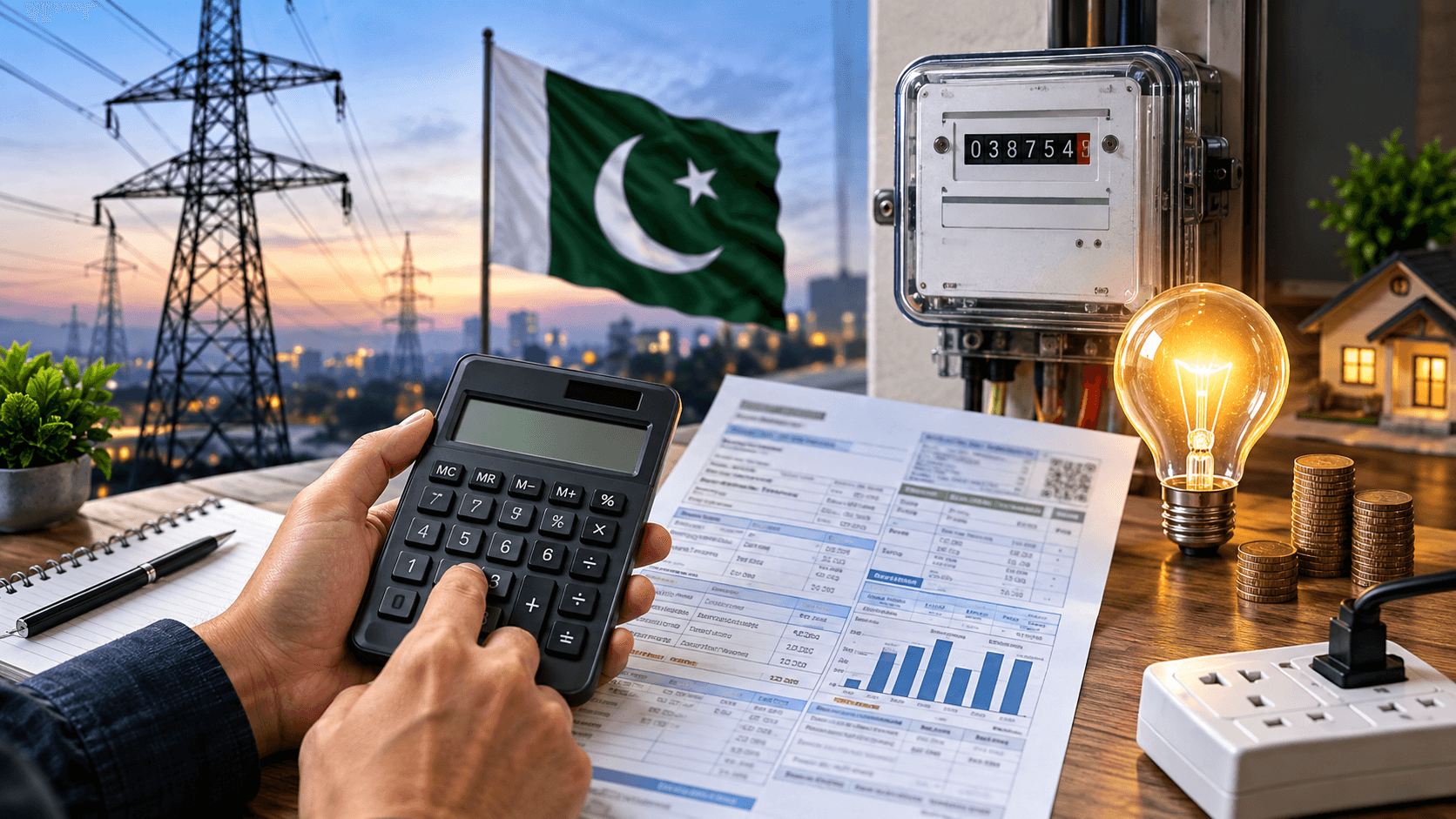
Calculating an electricity bill in Pakistan can seem confusing because the final amount is not based on electricity units alone. Your bill can include different tariff slabs, fixed charges, taxes, duties, surcharges and other adjustments.
An Electricity Bill Calculator Pakistan can help consumers estimate their monthly electricity cost by entering the number of units consumed and applying the relevant tariff structure.
For households trying to control their monthly expenses, understanding how the electricity bill is calculated is especially useful. It can also help identify why the payable amount is higher than expected.
Electricity Bill Calculator Pakistan: What You Need to Know
The basic starting point for calculating an electricity bill is the number of electricity units consumed during the billing period.
Your meter records electricity consumption in kilowatt-hours (kWh). One unit of electricity is equal to one kWh.
For example, if your meter shows that you consumed 250 units during a billing period, the applicable residential tariff slabs are used to calculate the energy charges.
However, the final bill is normally more complicated than simply multiplying 250 units by one electricity rate.
Different portions of consumption may fall into different tariff slabs. The bill may then include additional charges and government taxes.
How to Calculate Your WAPDA Electricity Bill
Although people commonly use the term WAPDA bill, electricity distribution in Pakistan is handled by different distribution companies, commonly known as DISCOs.
These companies serve different regions and may apply tariffs according to the applicable consumer category and government-approved tariff structure.
A simple calculation process involves these five key steps.
1. Check Your Electricity Units
First, check the units consumed during the billing period.
You can usually find the previous meter reading, current meter reading and consumed units on your electricity bill.
The difference between the current and previous readings gives the consumption for the billing period.
For example:
Previous reading: 15,000 units Current reading: 15,250 units Consumption: 250 units
This consumption figure is then used to determine the applicable tariff.
2. Identify Your Consumer Category
The applicable tariff depends on your consumer category.
Residential consumers are generally billed under domestic tariff structures, while commercial, industrial and other consumers have different rates and conditions.
Your electricity bill contains information about your tariff category, sanctioned load and other account details.
Therefore, entering the correct consumer category is important when estimating your bill.
3. Apply the Relevant Tariff Slabs
Pakistan's electricity tariff system can use different slabs depending on consumption and consumer classification.
This means the cost per unit can change as consumption moves into higher slabs.
For this reason, a simple calculation such as:
Units × one fixed rate
may not accurately represent the complete electricity bill.
A calculator should instead use the applicable tariff structure for the relevant consumer category.
Consumers should also check the latest officially notified rates because electricity tariffs can change following regulatory or government decisions.
4. Add Fixed Charges and Other Applicable Charges
Electricity bills can contain charges in addition to energy consumption.
Depending on the applicable tariff and consumer category, the bill may include fixed charges and other components.
Some bills can also contain adjustments related to previous billing periods or tariff mechanisms.
These additional components can make the final payable amount considerably different from the basic energy charge.
5. Include Taxes, Duties and Surcharges
Taxes and other applicable charges are another important part of the final electricity bill.
The exact amount depends on the consumer category, applicable regulations and the charges appearing on the bill.
The final bill can therefore be different from the amount calculated from electricity units alone.
Electricity Bill Example
Suppose a household consumes 200 electricity units during one billing period.
The calculation would begin by identifying the applicable domestic tariff slab or slabs.
The energy charge would then be calculated according to the relevant tariff structure.
After that, applicable fixed charges, taxes, surcharges and other bill components would be considered.
The resulting figure provides an estimated payable amount.
This example demonstrates why two households with different consumer categories or billing circumstances may receive different bills even when their electricity consumption is similar.
Why Your Electricity Bill Can Be Higher Than Expected
Several factors can increase the final amount shown on an electricity bill.
The first is higher electricity consumption. Using air conditioners, electric heaters, water pumps, irons, refrigerators and other high-power appliances can significantly increase monthly units.
Moving into a higher tariff slab can also affect the calculation.
Another reason can be additional charges or adjustments appearing on the bill. Taxes, surcharges, fixed charges and previous-period adjustments may all contribute to the final payable amount.
Consumers should therefore compare the current bill with previous bills instead of looking only at the total amount.
How to Read Your Electricity Bill
A typical electricity bill contains several important pieces of information.
Consumers should check the billing month, meter reading, previous reading, current reading, consumed units and tariff information.
The bill also shows the due date and total amount payable.
Some bills include additional information about taxes, surcharges, adjustments and other charges.
Checking these sections can help consumers understand how the final amount was calculated.
How to Reduce Your Electricity Consumption
Understanding your electricity usage can also help reduce monthly costs.
High-consumption appliances should be used carefully, particularly during periods of heavy electricity use.
Air conditioners can account for a substantial share of household electricity consumption. Setting an appropriate temperature and avoiding unnecessary operation can help control usage.
LED lighting generally consumes less electricity than traditional incandescent lighting.
Switching off appliances and lights when they are not needed can also reduce unnecessary consumption.
Regular maintenance of appliances can further help ensure efficient operation.
Electricity Bill Calculator vs Actual WAPDA Bill
An online calculator provides an estimate, while your electricity company's issued bill is the actual statement used for payment.
A calculator may not include every adjustment, surcharge or account-specific charge appearing on an official bill.
Therefore, the calculated amount should be treated as an estimate rather than an exact payable figure.
For the most accurate result, consumers should compare the calculator's estimate with the latest tariff information and the charges shown on their official electricity bill.
Check Official Electricity Tariff Information
Electricity tariffs in Pakistan can change, so consumers should use current official tariff information when calculating their expected bill.
The applicable rates can depend on the consumer category, consumption level and other conditions.
For this reason, an Electricity Bill Calculator Pakistan should be updated whenever an officially notified tariff change takes effect.
Consumers should also verify important billing information through their relevant electricity distribution company or official government and regulatory sources.
Final Thoughts
An Electricity Bill Calculator Pakistan can make it easier to estimate monthly electricity expenses.
The calculation starts with electricity units and then considers the applicable tariff slabs, consumer category, fixed charges, taxes, surcharges and other relevant components.
Understanding these elements gives consumers a clearer picture of how their WAPDA electricity bill is calculated.
Because tariffs and applicable charges can change, the final amount should always be checked against the latest official electricity bill and current tariff information.
What happens next for national
We will keep this page updated as the story develops rather than publishing a near-duplicate at a new address. Follow National for related coverage.
Get the Verified Brief
One email each morning with the stories we checked overnight.
Spotted an error? Read our corrections policy and tell the newsroom.