
How to Prepare for the Punjab Police Constable Written Test at Home
Prepare for the Punjab Police Constable Written Test at home with 7 practical study tips, key subjects, a daily study plan, and smart exam preparation advice.

By News Desk · Verified Pakistan News Desk
Published · 6 min read
Preparing for the Punjab Police Constable Written Test at home doesn't have to be difficult. You don't need expensive coaching classes or a room full of books to get started. With a clear study plan, useful learning materials, and regular practice, you can prepare confidently without leaving your home.
Many candidates struggle because they don't know where to begin. Some spend hours memorizing random questions, while others ignore important subjects until the last minute. The good news? A simple, organized approach can make your preparation much easier.
Here are seven practical tips to help you prepare for the written test and make the most of your study time.
1. Understand the Punjab Police Constable Written Test Syllabus
Before opening your books, find out what you need to study. Understanding the syllabus helps you focus on relevant topics instead of wasting time on unnecessary material.
According to the official Punjab Police recruitment information, the constable written examination includes English, Urdu, and General Knowledge. However, the exact paper pattern and recruitment requirements may vary between advertisements.
Start by checking the latest recruitment notice and any official instructions issued for your district or recruitment category.
For your general preparation, focus on these subjects:
- English: Basic grammar, vocabulary, spelling, sentence correction, and comprehension.
- Urdu: Grammar, vocabulary, sentence structure, and reading comprehension.
- General Knowledge: Pakistan's history, geography, important national events, and everyday information.
- Current Affairs: Important developments in Pakistan and around the world.
You can also practise basic mathematics, Islamic Studies, and computer knowledge if these topics appear in your applicable syllabus or preparation material.
Remember, the official syllabus should always guide your final study plan.
2. Create a Simple Daily Study Timetable
A study timetable keeps you organized and prevents last-minute panic. Instead of studying randomly, divide your available time between different subjects.
If you can manage three hours daily, try this routine:
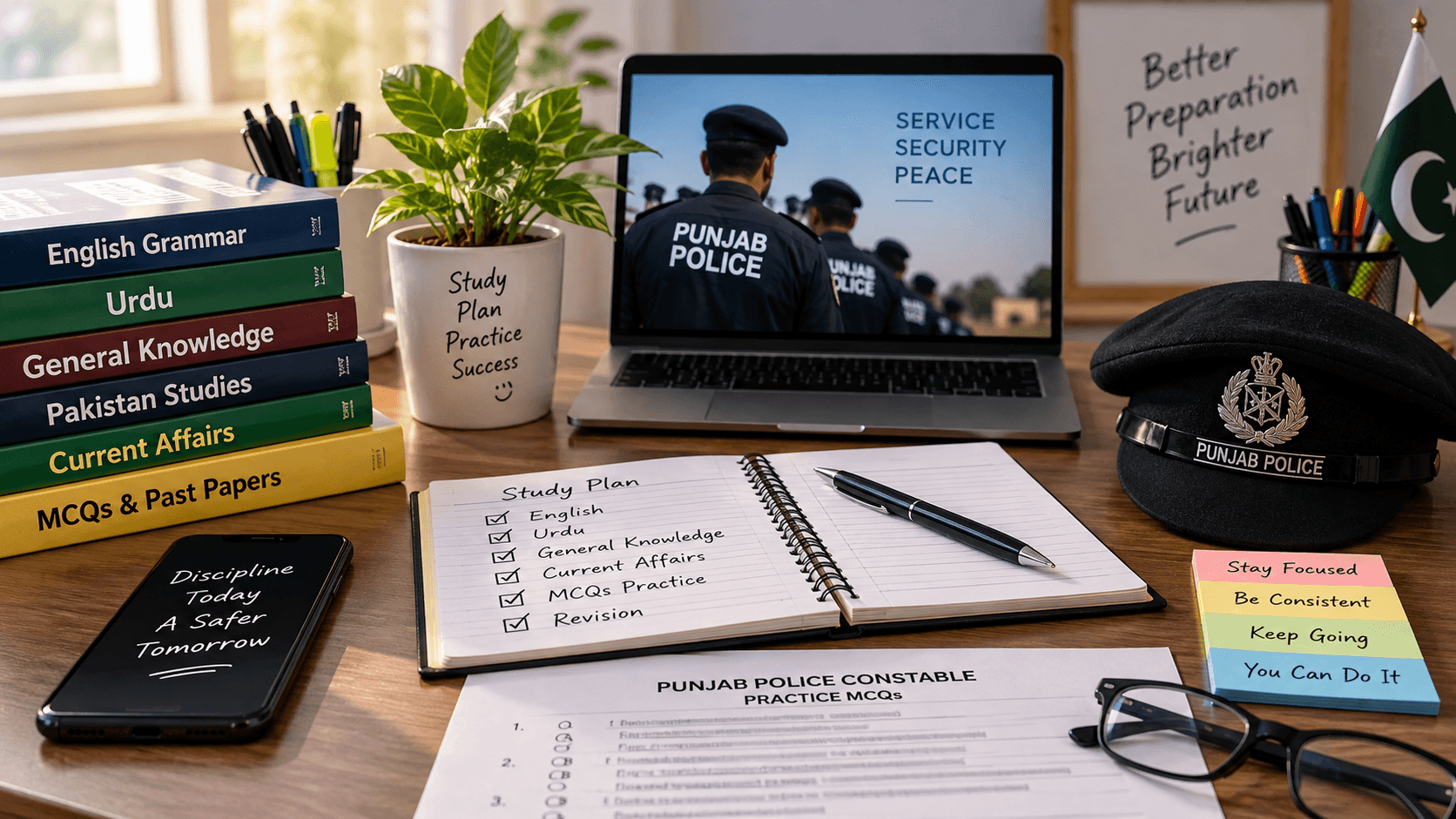
- 45 minutes: English grammar and vocabulary.
- 45 minutes: Urdu and General Knowledge.
- 30 minutes: Current Affairs and Pakistan Studies.
- 30 minutes: Mathematics or another relevant subject.
- 30 minutes: MCQ practice and revision.
Adjust this routine according to your strengths, weaknesses, and official syllabus.
Choose a quiet place where you can concentrate. Keep your mobile phone away unless you're using it for educational purposes.
Studying regularly for a few focused hours is usually more productive than sitting with your books all day without a clear goal.
3. Strengthen Your English and Urdu Skills
English and Urdu deserve special attention during your Punjab Police Constable Written Test preparation.
Start with basic English grammar. Revise tenses, articles, prepositions, singular and plural forms, synonyms, antonyms, and common spelling mistakes.
Don't try to memorize hundreds of difficult words in one sitting. Learn a few useful words daily and revise them the next morning.
For Urdu, practise grammar, correct spellings, vocabulary, and sentence structure. Reading short Urdu passages can also improve your understanding and reading speed.
Here's a useful trick: Write down every question you answer incorrectly. Review those mistakes at the end of the week.
This small habit can help you identify weak areas and avoid repeating the same errors.
4. Improve Your General Knowledge and Current Affairs
General Knowledge is an important part of the preparation process. It covers a wide range of topics, so you'll need a practical approach.
Begin with Pakistan's history and geography. Learn about important historical events, provinces, major rivers, mountains, national symbols, and significant personalities.
You should also understand basic facts about the Constitution of Pakistan, national institutions, and important international organizations.
For Current Affairs, spend 15 to 20 minutes reading reliable news sources every day.
Focus on important national developments, international events, sports, science, and major government announcements.
Avoid relying entirely on social media posts because outdated or incorrect information can easily spread online.
Make short notes instead of copying entire news articles. Before the exam, these notes will help you revise important facts without searching through dozens of websites.
5. Practise MCQs and Previous Test Papers
Reading textbooks is helpful, but practice questions show how well you understand a topic.
Collect available Punjab Police Constable Written Test past papers, sample questions, and reliable MCQ preparation materials.
Begin with subject-wise practice. For example, solve English questions one day and General Knowledge questions the next.
Once you've covered the main topics, start attempting mixed-question papers.
Set a timer while solving questions. This will help you develop the habit of working under exam conditions.
After completing each practice session, check your answers carefully.
Don't simply count your correct answers and move on. Find out why you made mistakes and revise the related topics.
Keep in mind that unofficial past papers and online question banks may contain errors. Verify doubtful answers using reliable textbooks or official educational resources.
6. Take Weekly Mock Tests and Track Your Progress
A mock test is one of the easiest ways to check whether your preparation is moving in the right direction.
Set aside one day each week for a complete practice test. Use the official exam duration and question pattern whenever those details are available.
Sit in a quiet room, switch off unnecessary notifications, and complete the paper without checking your notes.
When you're finished, calculate your score and identify the subjects where you lost the most marks.
Keep a simple notebook to record your weekly progress.
For example, if you struggle with English grammar, give that subject extra attention during the following week.
Don't feel discouraged by a low score in your first mock test. Use it to understand what needs improvement.
As the exam approaches, practise answering questions accurately while managing your time.
7. Revise Smartly and Prepare for Exam Day
The final days before the Punjab Police Constable Written Test should be dedicated mainly to revision.
Go through your short notes, important facts, grammar rules, and previously incorrect MCQs.
Avoid starting several new books just before the examination. Too much unfamiliar information can create unnecessary confusion.
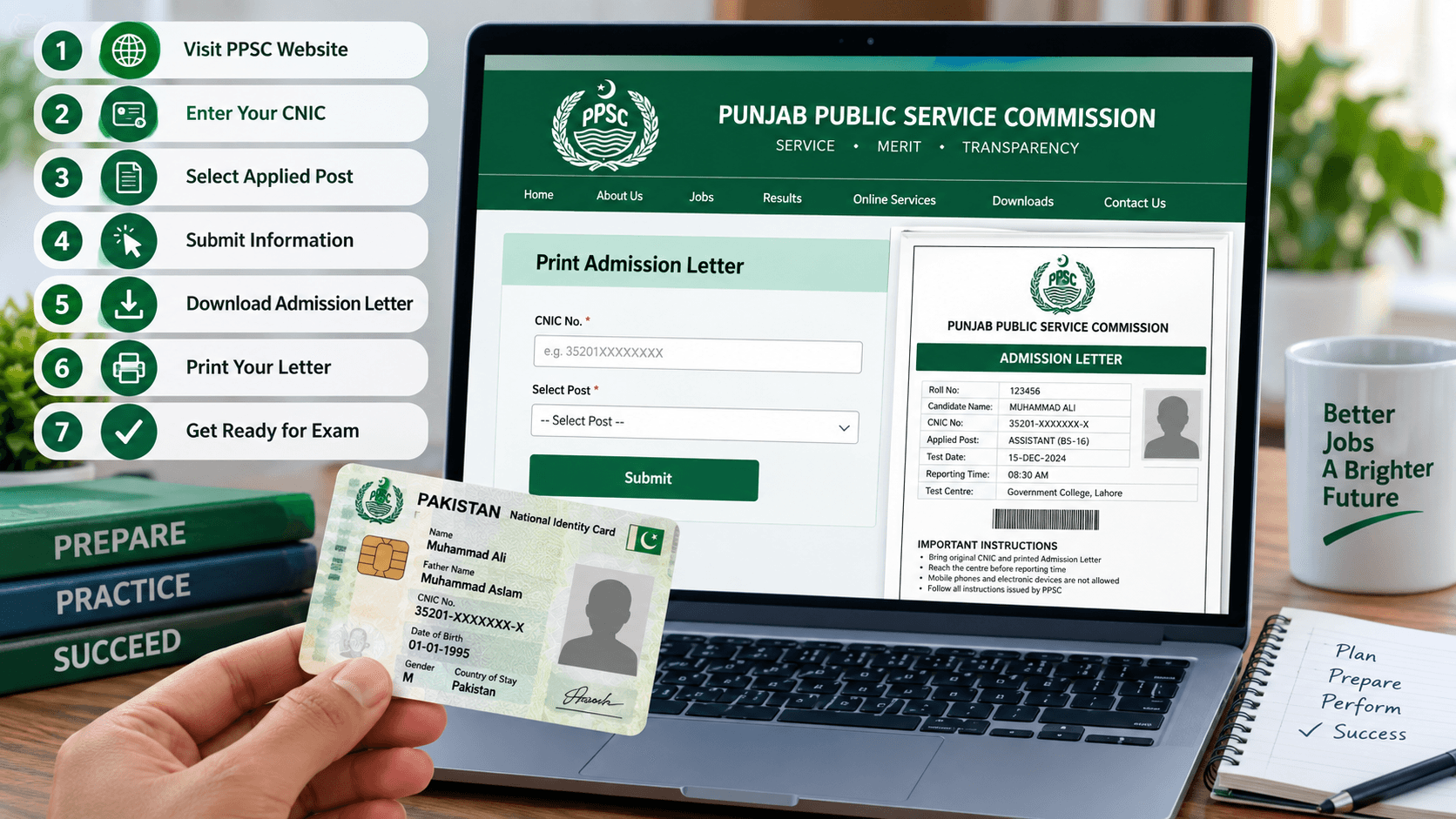
Prepare your required documents in advance. Check your official examination instructions for the reporting time, venue, identification requirements, and permitted items.
Get enough sleep the night before your test and plan your journey so you can reach the examination centre on time.
During the paper, read every question carefully. Answer the questions you understand first and return to difficult ones if time allows.
Check the official instructions before making guesses, particularly if the examination includes negative marking.
Final Thoughts
Preparing for the Punjab Police Constable Written Test at home is possible with consistent effort and the right study routine.
Understand the syllabus, strengthen your basic knowledge, practise MCQs, and review your mistakes regularly. You don't need to study everything at once. Small improvements each day can make a meaningful difference over time.
Most importantly, follow the latest official recruitment instructions rather than depending on rumours or outdated test patterns.
Stay focused, practise regularly, and give yourself enough time to prepare. A well-organized study plan can help you approach the examination with greater confidence.
Official Sources and Further Reading
Punjab Police Recruitment Information: https://www.punjabpolice.gov.pk/recruitment2011
Punjab Police Official Recruitment Advertisements: https://www.punjabpolice.gov.pk/punjabpolice-jobs-archived
Punjab Police Official Website: https://www.punjabpolice.gov.pk/
What happens next for national
We will keep this page updated as the story develops rather than publishing a near-duplicate at a new address. Follow National for related coverage.
Get the Verified Brief
One email each morning with the stories we checked overnight.
Spotted an error? Read our corrections policy and tell the newsroom.