
Government to cap fuel cost adjustment at 83 paise per unit
The government will cap the rise in fuel cost adjustment at 83 paise per unit for October to December 2026, sparing consumers a Rs2.88 increase.

By Suleman Mirza · Reporter
Published · Updated · 5 min read
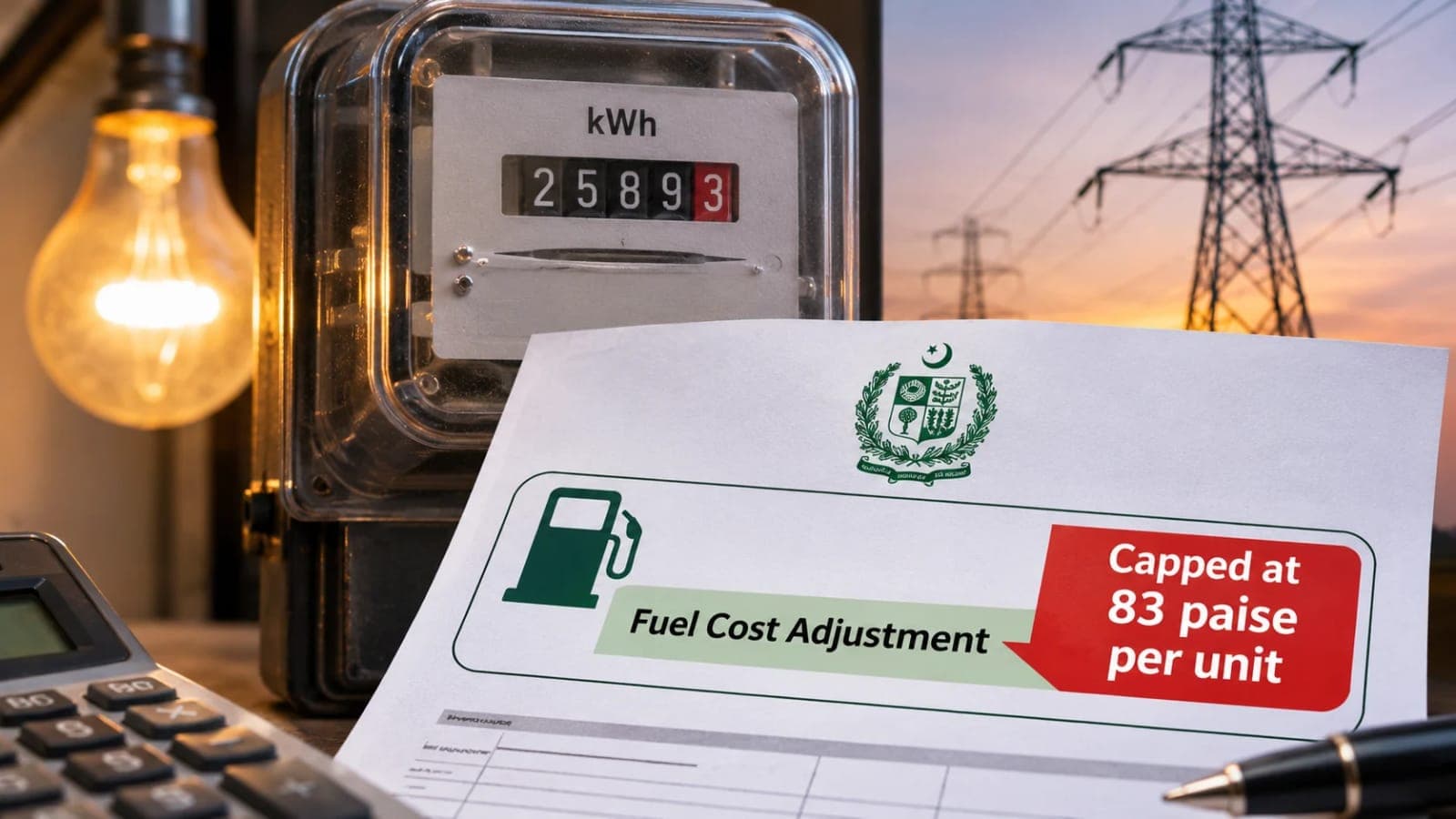
If you opened your electricity bill this month and braced for another jump, relief is on the way. The federal government has said it will keep the rise in fuel cost adjustment to 83 paise per unit for the October to December 2026 quarter, instead of the full Rs2.88 per unit increase reaching consumers in their December bills. The announcement came from the Power Division on Thursday, 26 November, while the regulator Nepra was hearing a petition for the bigger increase. For a family using 300 units a month, the full increase would have added about Rs864 to the bill. Under the cap, the extra comes to about Rs249, a saving of roughly Rs615.
What the fuel cost adjustment cap means for your bill
Every electricity bill in Pakistan carries a line called the fuel cost adjustment, or FCA, the monthly pass through of changes in the cost of fuel used to generate power. When furnace oil, gas or coal gets dearer on the world market, the adjustment rises. When fuel gets cheaper, it falls. It sits apart from the base tariff.
The petition before Nepra on Thursday asked for an additional FCA of Rs2.88 per unit for electricity consumed in September, to be recovered through December bills. It was filed by the Central Power Purchasing Agency, which buys power from plants for the distribution companies. Under the proposal, that increase is held to about 83 paise per unit, inclusive of taxes, for October to December, measured against the September FCA.
The cap matters most for December bills, when the September adjustment was due to appear. It also shields consumers from the increases expected in November and December, so households get one fixed figure for the quarter instead of three monthly shocks.
Why the fuel cost adjustment rose this time
The Power Division pointed to the sharp rise in international fuel prices after the Iran-US war and the energy crisis that followed in the Middle East. Liquefied natural gas (RLNG) and coal both became dearer, and Pakistan imports a large share of both. When imported fuel costs more, each unit of electricity costs more to produce.
The division said it had watched the situation closely, using planned load management and making better use of the fuel already available, so the most expensive fuel was used as little as possible. Even so, the pressure was too large to absorb fully, which is why the government moved to a new mechanism. Winter adds another strain, as generation patterns change in the cold months.
How the new forward-looking mechanism works
The proposal is called the Forward-looking Fuel Cost Adjustment, or FFCA. Under the old system, the FCA was worked out after the fuel had been burned, and the bill followed a month or two later. Under the new fuel cost adjustment mechanism, the figure is fixed in advance for a full quarter, so consumers know what is coming.
The mechanism still needs formal approval. The Power Division said policy guidelines under Section 31(4) of the Nepra law would be placed before the regulator by Friday morning, 27 November. The government has cleared the directive, and once approvals are in place, the division will issue the guidelines to Nepra.
Nepra's member for tariff, Amina Ahmed, welcomed the decision and promised due diligence as soon as possible. Until the guidelines are issued and Nepra signs off, the cap is a proposal with political backing, not yet a final notified tariff.
What happens next with the fuel cost adjustment
The policy guidelines reach Nepra on Friday morning. After due diligence, the Power Division will issue the formal guidelines, and consumers should then see the capped figure in their December bills.
The national average electricity tariff, inclusive of taxes, stood at Rs53.04 per unit when this government took office in March 2024, while the industrial tariff was Rs62.99 per unit. Those are high numbers for households already coping with rising prices. A cap of 83 paise does not make electricity cheap. It stops a bad quarter from becoming worse.
What to check on your own bill
When your December bill arrives, look for the FCA line and compare it with November's figure. The rise should be close to 83 paise per unit, not Rs2.88. If it looks much larger, check whether another charge, such as a quarterly tariff adjustment, has been added in the same month.
Your slab matters too. The per unit price depends on how many units you use, and the 2026 slab rates are in our guide to electricity per unit prices in Pakistan. If your usage has crept into a higher slab, the bill can rise even when the fuel adjustment is capped.
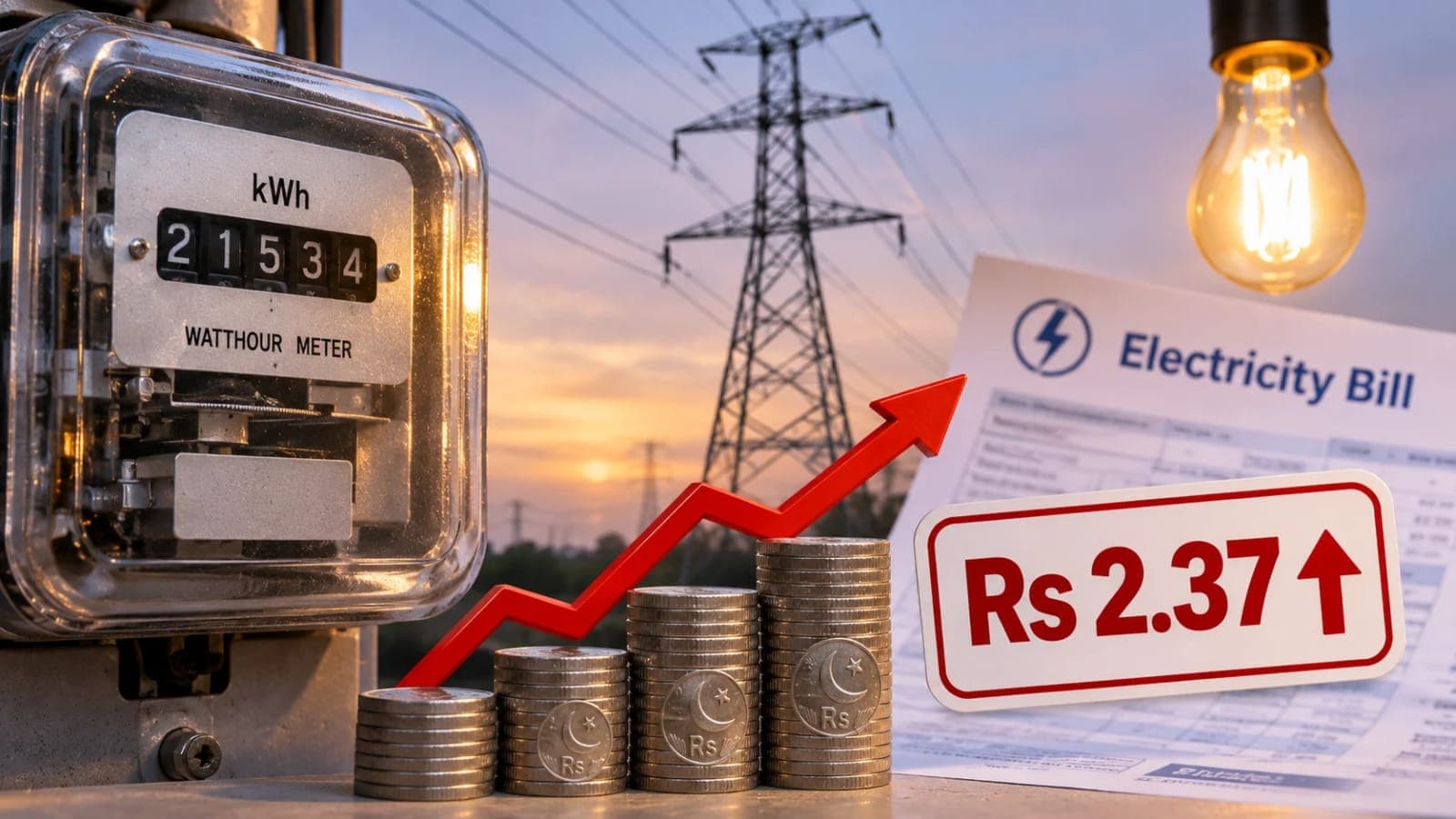
You can also check your bill online before the paper copy arrives, using our guide on how to check your electricity bill online. If your November bill already carried a tariff rise, our report on the Rs2.37 tariff increase for November bills explains what that charge was.
Frequently asked questions
What is fuel cost adjustment?
It is the monthly charge on your bill that passes on changes in fuel prices. When the fuel used to generate electricity costs more, the adjustment rises. When fuel costs less, it falls.
Is the 83 paise cap final?
Not yet. The government has proposed the mechanism and cleared the directive, but Nepra must still complete its due diligence and the Power Division must issue formal guidelines.
When will the new rates appear on my bill?
The capped figure is expected in December bills, where the September adjustment was due to be recovered, and the cap covers the October to December 2026 quarter.
For now, the fuel cost adjustment story is one of relief with a condition attached. The government has moved to hold the increase to 83 paise a unit, and the regulator has welcomed the move. Households will know it has become real when the capped figure shows up on their December bills.
What happens next for business
We will keep this page updated as the story develops rather than publishing a near-duplicate at a new address. Follow Business for related coverage.
Get the Verified Brief
One email each morning with the stories we checked overnight.
Spotted an error? Read our corrections policy and tell the newsroom.