
How to Identify a Tampered Chassis Number on a Used Motorcycle
Learn how to spot a tampered chassis number on a used motorcycle with 7 key warning signs, VIN checks, document verification, and practical tips before buying.

By News Desk · Verified Pakistan News Desk
Published · Updated · 7 min read
Buying a second-hand motorcycle can save you money, but a shiny paint job and smooth engine don't always tell the whole story. One of the most important things to inspect is the chassis number. If someone has changed, removed, or replaced it, you could end up buying a motorcycle with a questionable history.
A tampered chassis number can be difficult to recognize, especially when the seller has carefully covered the affected area. Fortunately, a few simple checks can help you spot suspicious markings before handing over your money.
Here's what you need to know about identifying a tampered chassis number and protecting yourself when buying a used motorcycle.
What Is a Motorcycle Chassis Number?
A chassis number is a unique identification code assigned to a motorcycle by its manufacturer. It's usually stamped directly onto the frame and helps identify the vehicle throughout its life.
Many modern motorcycles use a 17-character Vehicle Identification Number (VIN), although the format can vary depending on the motorcycle's age and market.
The chassis number connects the motorcycle to its registration details, ownership records, and manufacturer information. If the number has been altered, verifying the motorcycle's identity becomes much harder.
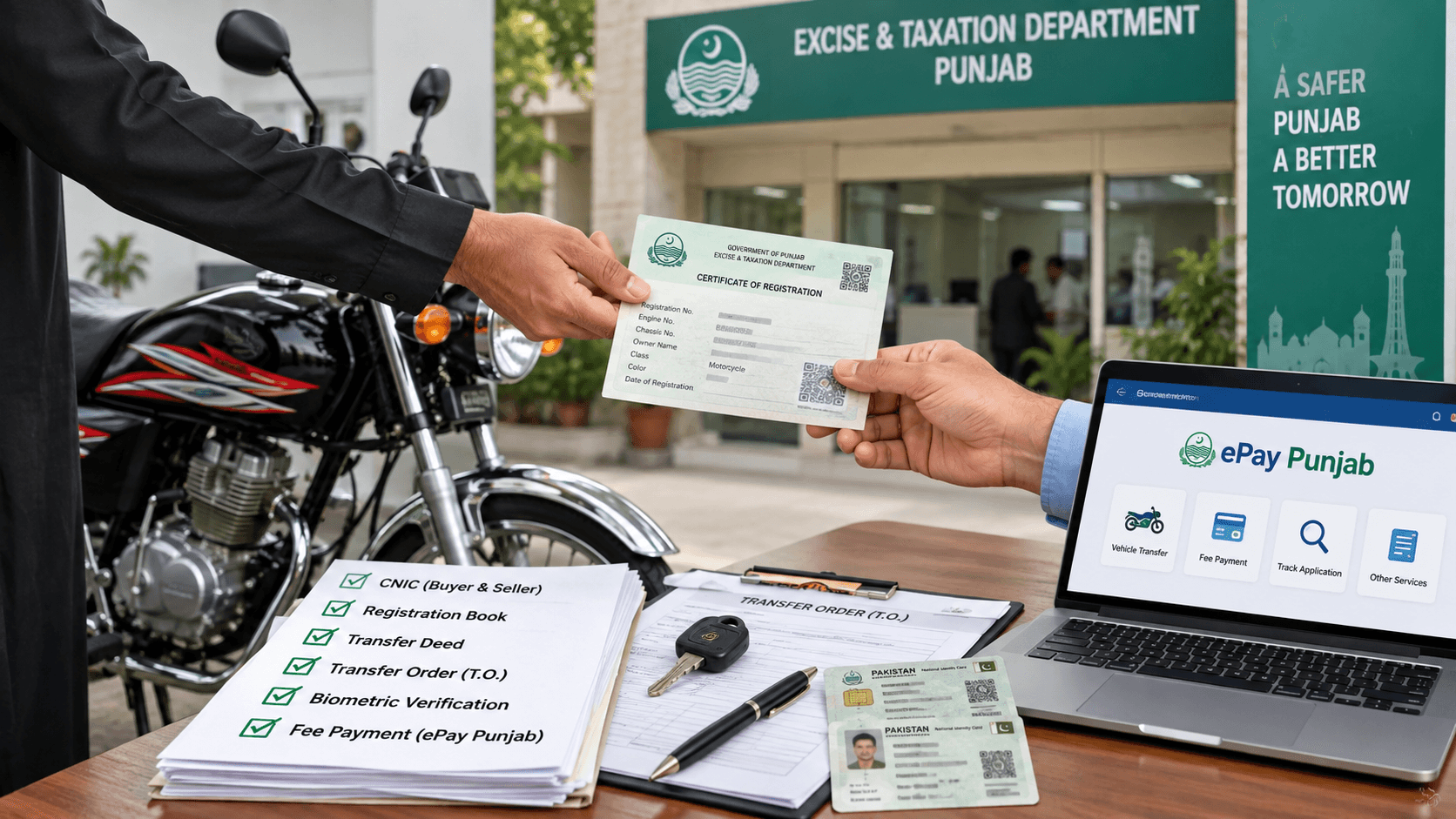
Also Read: How to Transfer a Used Motorcycle to Your Name in Punjab
7 Key Signs of a Tampered Chassis Number
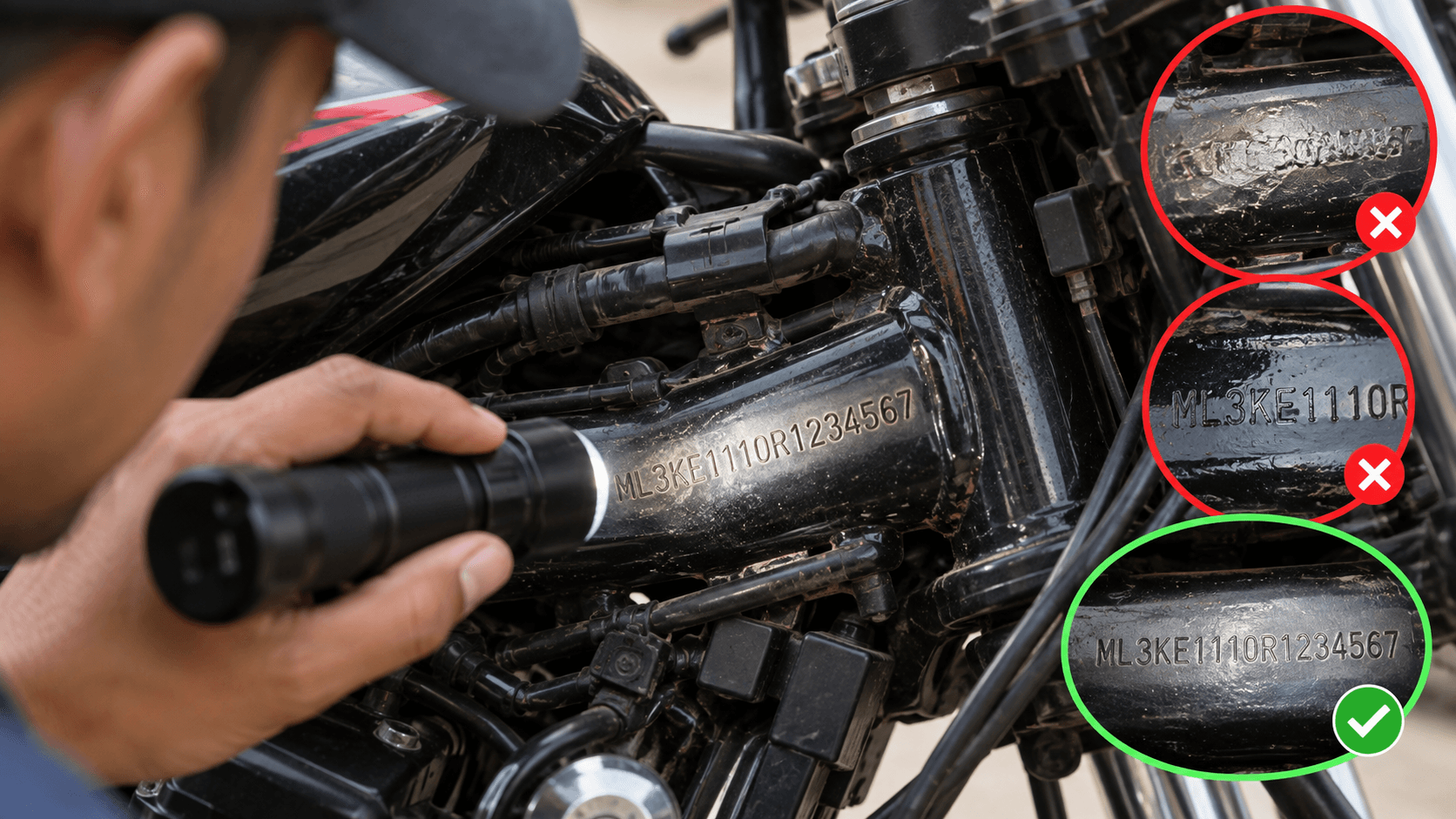
1. Uneven or Misaligned Characters
Start by examining the letters and numbers stamped on the motorcycle frame.
Factory markings generally follow a consistent pattern, although their appearance varies between manufacturers and production methods.
Look for characters that appear unusually crooked, crowded, or different in depth. A single digit that looks noticeably different from the others deserves closer inspection.
However, older motorcycles may have less uniform factory markings. Compare the number with an authentic example from the same model before drawing conclusions.
2. Scratches and Grinding Marks Around the Number
A tampered chassis number may have visible scratches, grinding marks, or an unusually smooth patch of metal around it.
Pay attention to the surrounding frame surface. Does one small section look freshly polished while the rest shows normal wear?
A sudden change in the metal's texture could indicate previous work in that area.
Not every scratch means someone has altered the number. Routine maintenance, accident repairs, and ordinary wear can also leave marks. Still, unexplained damage around the identification area shouldn't be ignored.
Also Read: New Cars in Pakistan 2026 – Prices, Features and Latest Models
3. Fresh Paint Around the Chassis Number
A freshly painted motorcycle isn't necessarily suspicious. Many owners repaint their bikes to improve their appearance or repair cosmetic damage.
The concern begins when fresh paint appears only around the chassis number.
Look for uneven paint thickness, overspray, unusual color differences, or paint that makes the stamped characters difficult to read.
Ask the seller why that particular section was repainted. If the explanation doesn't match the motorcycle's repair history, arrange a professional inspection.
Never scrape away paint or use chemicals to expose a hidden number yourself.
4. Signs of Welding or Frame Replacement
Inspect the metal surrounding the identification area for unusual welding, patched sections, or differences in the frame's finish.
A welded plate or a section of metal that doesn't match the surrounding frame may require further investigation.
Some motorcycles undergo legitimate frame repairs or replacements following accidents. These repairs should have supporting documentation where required.
If the seller claims the frame was replaced, request the repair invoice and any official identification or registration records.
A mechanic familiar with the motorcycle's make and model can help determine whether the frame shows signs of unusual modification.
5. Chassis Number Doesn't Match the Registration Documents
One of the easiest ways to identify a possible problem is to compare the physical chassis number with the motorcycle's registration documents.
Read every letter and digit carefully. Don't rely on the seller reading the number aloud.
Even a single incorrect character should be investigated before purchasing.
Check the registration details, model, manufacturing information, and ownership records through the appropriate vehicle registration authority.
A clerical mistake is possible, but an unexplained mismatch could indicate a registration problem, frame replacement, or vehicle identity fraud.
6. Missing or Damaged Identification Labels
Some motorcycles have manufacturer identification labels in addition to the chassis number stamped on the frame.
These labels may contain the VIN, manufacturing information, or other vehicle details.
Look for labels that appear damaged, unusually new, incorrectly positioned, or inconsistent with the motorcycle's original design.
A missing label doesn't automatically mean the motorcycle is stolen. Labels can deteriorate or disappear during repairs.
However, if the stamped number and available manufacturer labels show different identification details, ask the manufacturer or an authorized inspection service to investigate.
7. Seller Refuses to Allow Proper Verification
Sometimes the biggest warning sign isn't on the motorcycle itself. It's the seller's behavior.
Be cautious if the seller refuses to show the chassis number, avoids providing registration documents, or pressures you to complete the purchase immediately.
You should also question a seller who won't allow an independent mechanic to inspect the motorcycle.
A legitimate seller should be able to explain the vehicle's ownership history and provide the documents needed for verification.
If important questions remain unanswered, don't hand over your money.
How to Check a Motorcycle Chassis Number Before Buying
Begin by locating the chassis number using the motorcycle's owner's manual. Its position varies by manufacturer and model, but it's commonly found around the steering head or another designated frame section.
Use a flashlight to examine the markings without damaging the surface.
Next, compare the complete number with the registration documents and any available manufacturer identification labels.
For motorcycles with a compatible 17-character VIN, an official VIN decoder may help confirm manufacturer information, model year, and other recorded details.
You can also request a vehicle history or stolen-vehicle check through an appropriate service in your country.
Remember, an online VIN search alone cannot prove that a motorcycle is genuine. Criminals may copy identification numbers from legitimate vehicles.
For additional protection, ask an authorized dealership, vehicle inspection center, or registration authority to verify the motorcycle's identity.
What Should You Do If You Suspect Chassis Number Tampering?
If something looks suspicious, stop the purchase until the issue has been properly investigated.
Take clear photographs of the visible identification number and relevant documents with the seller's permission. Keep a record of any discrepancies you notice.
Avoid trying to restore, restamp, grind, or otherwise modify the number. Such actions could damage important evidence and create further legal problems.
Contact the relevant vehicle registration authority or local police for guidance on official verification.
If the seller claims the motorcycle has undergone legitimate frame repairs, ask for supporting documents and have them checked by the appropriate authority.
Don't assume every unusual marking proves criminal activity. A qualified inspection can help distinguish legitimate repairs and manufacturing differences from possible identification tampering.
Final Thoughts
A used motorcycle might look perfect on the outside, but its identity deserves just as much attention as its engine and overall condition.
Checking for a tampered chassis number can help you avoid ownership disputes, registration difficulties, and the financial consequences of buying a motorcycle with an uncertain history.
Inspect the frame carefully, compare the identification details with official documents, and verify the motorcycle's records before making payment.
If the chassis number looks suspicious or the seller cannot explain an important discrepancy, arrange an independent inspection before proceeding.
A little extra time spent checking the motorcycle today could save you from a much bigger problem tomorrow.
Fact-Checking Sources
National Highway Traffic Safety Administration — VIN Decoder: https://www.nhtsa.gov/vin-decoder
National Insurance Crime Bureau — Vehicle Identification Inspection Guide: https://www.nicb.org/sites/files/2022-10/Vehicle%20Identification%20Inspection%20Guide.pdf
National Insurance Crime Bureau — Buying a Used Vehicle: https://www.nicb.org/prevent-fraud-theft/buying-vehicle
What happens next for auto
We will keep this page updated as the story develops rather than publishing a near-duplicate at a new address. Follow Auto for related coverage.
Get the Verified Brief
One email each morning with the stories we checked overnight.
Spotted an error? Read our corrections policy and tell the newsroom.