
Fake Loan App Scams in Pakistan: 9 Key Safety Rules 2026
Fake Loan App Scams in Pakistan can steal your money and personal data. Learn 9 key warning signs and practical ways to stay safe from loan fraud.

By News Desk · Verified Pakistan News Desk
Published · 8 min read
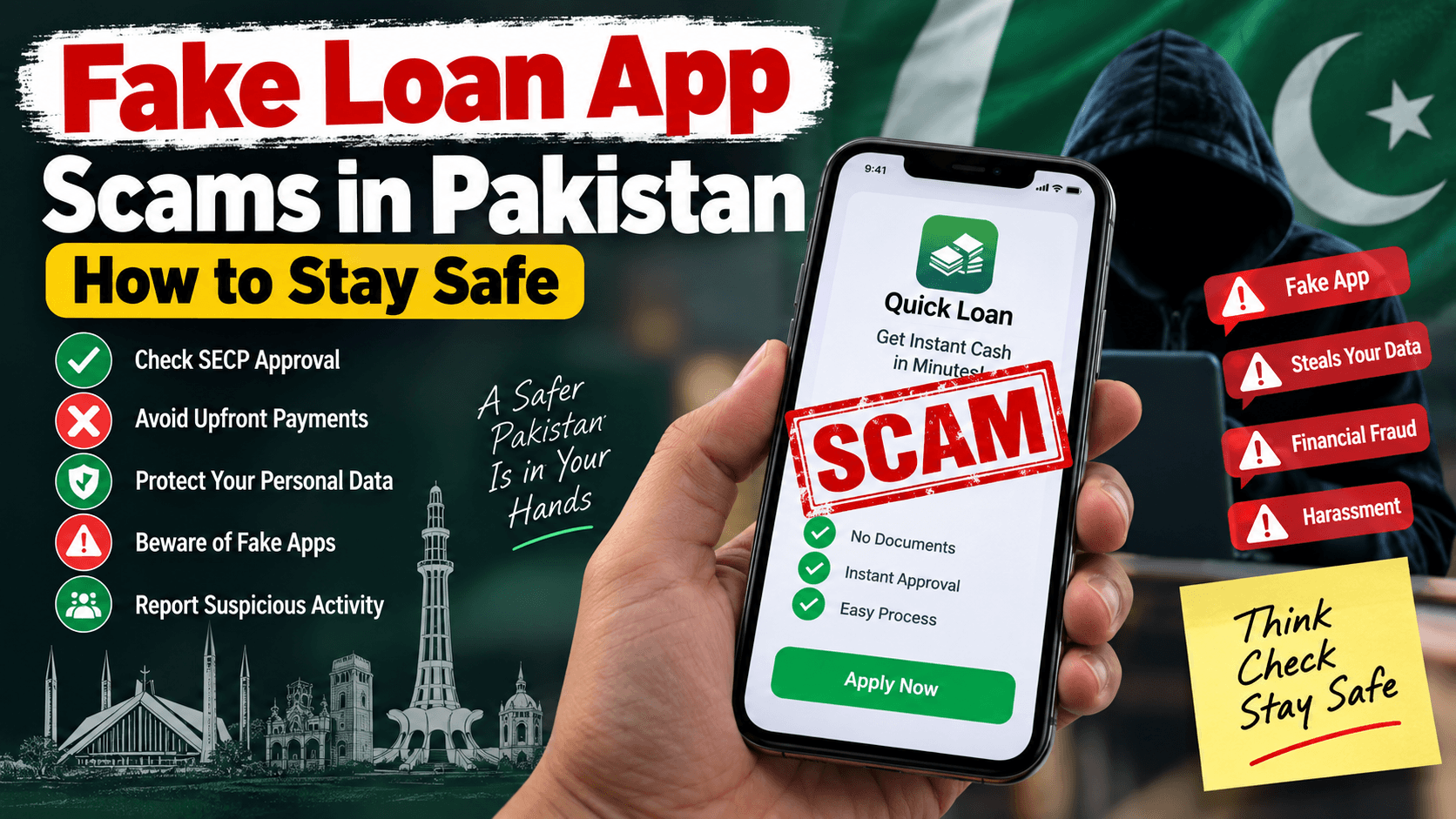
Fake Loan App Scams in Pakistan have become a serious concern for people searching for quick financial help. A small emergency, an overdue bill, or a sudden medical expense can make an instant loan advertised on a mobile phone look tempting.
Unfortunately, that urgency is exactly what scammers can exploit.
Some fraudulent loan operators promise easy approval, little paperwork, and instant cash. Behind the attractive offer, however, may be hidden charges, attempts to collect personal information, fake processing fees, or aggressive tactics.
The Securities and Exchange Commission of Pakistan (SECP) has repeatedly warned consumers about unauthorized lending platforms. In May 2025, the regulator said scammers were also promoting fraudulent loan schemes through social media advertisements, including offers presented as quick or interest-free loans.
The good news is that a few careful checks can help you spot many of these scams before they cause trouble.
What Are Fake Loan App Scams in Pakistan?
Fake loan app scams usually involve an app, website, social media page, advertisement, WhatsApp message, or other online platform that presents itself as a legitimate lender.
The offer is often deliberately attractive. You might see phrases such as:
“Instant loan in 5 minutes.”
“No documents required.”
“Guaranteed approval.”
“Interest-free loan.”
“Get cash today.”
A genuine financial service can certainly operate digitally. The problem isn't the use of an app itself. The important question is whether the lender and its lending application are properly authorized.
SECP maintains a whitelist of digital lending apps operated by duly licensed lending NBFCs. Its latest published whitelist is dated September 11, 2026.
That makes verification one of the simplest steps you can take before applying.
1. Check the Loan App With SECP
Don't assume an app is legitimate because its interface looks professional or its advertisement appears convincing.
Before providing your CNIC details, phone number, bank information, or other personal data, check whether the lending service appears on SECP's current approved list.
SECP whitelist of approved digital lending apps
SECP also publishes information about reported illegal personal loan apps and platforms. Importantly, an app's absence from an illegal-app list does not automatically mean that it is approved. The safer approach is to confirm that it appears on the official approved list.
2. Never Pay an Upfront “Loan Release” Fee Without Verification
One of the biggest warning signs is being asked to send money before receiving the promised loan.
A scammer might call the payment a processing fee, registration charge, insurance payment, security deposit, or account verification fee.
SECP has specifically warned about fraudulent schemes that attract borrowers and then demand upfront charges under such descriptions. In some cases, scammers disappear after receiving the payment without providing the promised loan.
So, if someone says, “Send Rs. 3,000 first and we'll release your Rs. 50,000 loan immediately,” don't rush.
Verify the lender independently before making any payment.
3. Be Careful With Apps Sent Through WhatsApp or APK Links
Another major red flag is a loan app sent as an APK file through WhatsApp, a website, SMS, social media, or an unknown download link.
SECP has previously warned that operators of illegal lending apps shifted toward APK files and alternative distribution channels after action was taken against unauthorized apps. The regulator highlighted risks including fraud, misuse of personal information, harassment, and blackmail.
Avoid installing unfamiliar APK files simply because someone promises fast money.
A few minutes of checking can save you from a much bigger headache later.
4. Check What Permissions the App Wants
Pay close attention to the permissions requested during installation and registration.
Why would a simple loan application need unrestricted access to unrelated personal information?
Permissions involving contacts, photos, storage, camera, location, or other sensitive information deserve careful scrutiny.
Google introduced requirements stating that apps whose primary purpose is providing or facilitating personal loans may not access users' contacts or photos. It also introduced licensing-documentation requirements for personal loan apps targeting users in Pakistan.
If a lending app's requests seem excessive, stop and investigate before continuing.
5. Don't Trust an App Just Because It Uses a Famous Name
A familiar company name or logo can create instant confidence. Scammers know that.
SECP has documented cases in which unauthorized apps used the names of licensed companies in an attempt to gain public trust.
Similarly, a social media advertisement can copy branding, use professional graphics, or make claims involving reputable organizations.
Instead of trusting the advertisement, independently visit the regulator's official resources and verify the lender.
A logo is easy to copy. Regulatory approval isn't.
6. Read the Loan Terms Before Pressing “Accept”
Even when dealing with an authorized lender, don't treat the “Accept” button as a formality.
Look carefully at the total amount you will repay, applicable charges, repayment date, late-payment costs, loan period, privacy terms, and any other conditions.
SECP has advised borrowers to review app permissions and evaluate disclosures relating to fees, late-payment charges, loan tenor, cooling-off periods, and privacy policies.
If you can't clearly understand how much the loan will cost, don't rush into it.
Fast money can become expensive money when the terms aren't understood.
7. Protect Your CNIC, OTP and Banking Information
Your personal information has value.
Avoid casually sending photographs of your CNIC, banking credentials, card information, passwords, PINs, or one-time passwords to strangers claiming to represent a loan company.
Be particularly suspicious when the conversation moves from an official-looking advertisement to a personal WhatsApp number and the person begins asking for sensitive details.
SECP's warning about social-media loan fraud notes that fraudulent offers can be used to obtain sensitive personal information from victims.
Treat an OTP like a key to your account: don't hand it to somebody you don't trust.
8. Watch for Pressure and Unrealistic Promises
Scammers often want people to act before they have time to think.
Common pressure tactics may include claims such as:
“Offer expires in 10 minutes.”
“Pay now or your application will be cancelled.”
“Guaranteed loan regardless of income.”
“Your loan is approved; just pay the verification charge.”
An urgent financial situation can make these messages difficult to ignore. Still, legitimate borrowing decisions deserve proper verification.
When someone combines a too-good-to-be-true offer with intense pressure to send money immediately, treat it as a warning sign.
9. Report Suspicious Loan Apps Instead of Staying Silent
If you come across a suspicious loan app, advertisement, website, or social media account, save useful evidence.
Screenshots of advertisements, payment requests, account details, messages, app pages, and transaction records can help document what happened.
SECP says it works with authorities including the Federal Investigation Agency (FIA) and Pakistan Telecommunication Authority (PTA) against fraudulent lending activity.
You can also check SECP's official information about reported illegal lending platforms:
SECP list of reported illegal personal loan apps and platforms
Don't continue sending money merely because a scammer claims that one more payment will solve the problem.
What Should You Do If You've Already Installed a Suspicious Loan App?
First, stop providing additional information or money until you've verified who is behind the app.
Review the permissions you've granted and remove unnecessary access where possible. Keep screenshots and transaction records instead of immediately deleting every piece of evidence you may need for a complaint.
If banking or payment information may have been exposed, contact the relevant bank or financial service through its official channel.
Change compromised passwords, especially if you've reused the same password elsewhere.
Most importantly, don't allow threats or demands for additional payments to push you into making another rushed transaction.
Why Fake Loan Scams Keep Finding Victims
These schemes can work because they appear when people are under financial pressure.
Someone who urgently needs Rs. 20,000 isn't necessarily thinking about app permissions, regulatory lists, privacy policies, or fake advertisements. They're thinking about solving today's problem.
Scammers can take advantage of that urgency by removing normal barriers: no lengthy forms, no branch visit, no waiting, and supposedly guaranteed approval.
That's why the best defence isn't simply being “smart.” It's developing a habit of verification.
Before borrowing through a digital platform, check the lender, read the terms, inspect permissions, and confirm regulatory approval.
Final Words
Fake Loan App Scams in Pakistan can look surprisingly convincing. A polished app, thousands of apparent downloads, a professional advertisement, or a familiar logo isn't enough to prove that a lender is legitimate.
Remember the simple rule: verify first, borrow second.
Check the latest SECP whitelist, avoid unknown APK files, question requests for upfront payments, protect your personal information, and read the full repayment terms before accepting a digital loan.
Five minutes spent checking an app today could prevent weeks of financial and personal trouble later.
Fact-Checking Sources
The information in this article was checked against official guidance and notices from the Securities and Exchange Commission of Pakistan and Google Play.
SECP — Approved Digital Lending Apps Whitelist
SECP — Illegal Personal Loan Apps and Platforms
SECP — Warning About Fraudulent Social Media Loan Schemes
What happens next for crime
We will keep this page updated as the story develops rather than publishing a near-duplicate at a new address. Follow Crime for related coverage.
Get the Verified Brief
One email each morning with the stories we checked overnight.
Spotted an error? Read our corrections policy and tell the newsroom.