
Punjab Panchayat System Approved to Bring Justice to Doorsteps
Punjab panchayat system approved by CM Maryam Nawaz to settle local disputes by mutual consent, with committees at village and union council level.

By Suleman Mirza · Reporter
Published · Updated · 4 min read
The Punjab panchayat system has been approved in principle by Chief Minister Maryam Nawaz Sharif to give people swift and affordable justice at their doorstep.
The approval came at a high level meeting in Lahore on Wednesday, 18 November 2026, where the chief minister received a detailed briefing on the proposed structure, procedures and jurisdiction of the system. According to UrduPoint, the Punjab panchayat system would settle local disputes through reconciliation and mediation, drawing on the longstanding traditions of the province.
Maryam Nawaz said the Punjab Panchayat Act was being introduced to bring informal dispute resolution within a formal legal framework. She said it would provide a simple, affordable and accessible forum where disputes are settled by mutual consent, and she asked officials to prepare a comprehensive plan covering rules, policy guidelines and regulations.
What the Punjab panchayat system will do
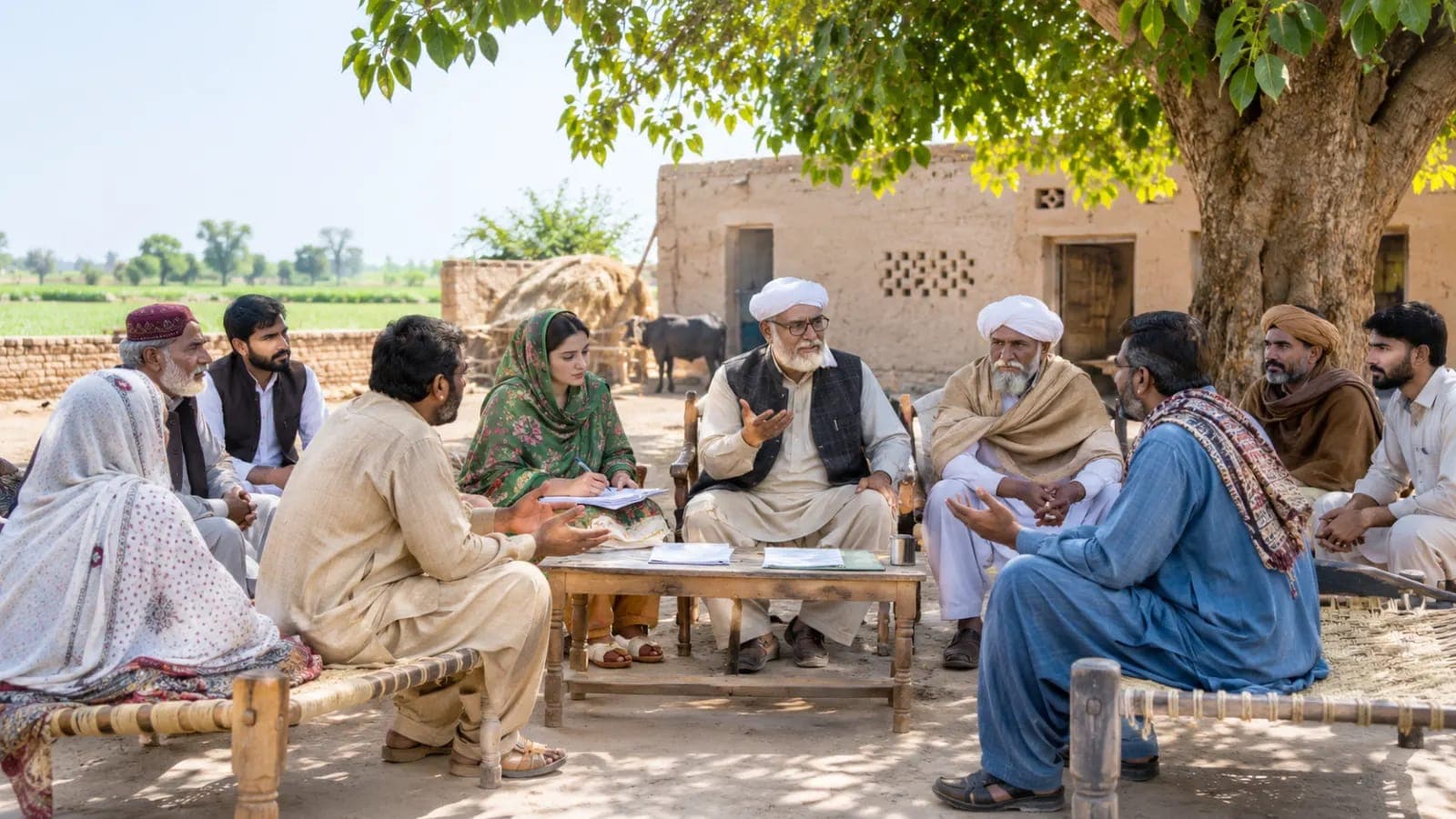
Under the plan, panchayat committees will be set up at union council, village, locality and settlement levels. They will hear local disputes and try to settle them with the mutual consent of the parties, so that people do not have to travel to court for every small matter.
The Punjab panchayat system is meant to make access to justice easier and more effective for women, minorities, poor people and disadvantaged groups. The chief minister said the government wanted to bring justice to people's doorsteps through social change, and to give citizens a real say in local decision making.
Who will sit on the panchayats
Members will be permanent local residents who are trusted by the public and considered impartial. The relevant deputy commissioner will appoint them. Good reputation, impartiality and wisdom will be the main criteria for selection.
The committees will include lambardars, teachers, retired judges, retired military officers and retired civil servants, along with other respected local figures. Citizens will be given the authority to make their own decisions, the chief minister said.
Limits to keep the system fair
The Punjab panchayat system will work within legal limits and the principles of justice and impartiality. The judicial jurisdiction of the courts and every citizen's fundamental right to seek judicial protection will remain fully intact, so no one will lose the right to go to court.
A formal negative list will also define what the panchayats can and cannot hear. Serious cases will fall outside their remit, and the list is meant to prevent any misuse of the system against women and vulnerable groups.
Why the government is bringing panchayats back
The chief minister said Punjab has a centuries old tradition of settling minor disputes through community mediation. She said disagreements can be resolved through mutual understanding, dialogue and the wisdom of respected elders, and that courts should not be the first forum for resolving differences. Panchayats should be, she said.
She added that the system would reduce the burden of pending cases on the courts and make swift justice possible. The idea is not new. Panchayats and musalihat anjumans were provided for under the Punjab Local Government Act 2013, with panels of respected local residents settling civil and criminal disputes by agreement, as The News reported in 2015. The Punjab panchayat system builds on that old tradition with a fresh legal framework.
Questions people are asking
What is the Punjab panchayat system? It is a new forum approved in principle by the Punjab government to settle local disputes by mutual consent, through committees of respected local residents at village, union council, locality and settlement levels.
Who can use a panchayat? Any citizen with a local dispute can approach it. The system is meant to help women, minorities, poor people and disadvantaged groups in particular.
Will a panchayat decision replace a court decision? No. The courts keep their full jurisdiction, and every citizen keeps the right to seek judicial protection. Panchayats settle disputes only by mutual consent.
What cases will panchayats not hear? Serious cases will stay outside their remit. A formal negative list will define the jurisdiction, to prevent misuse against women and vulnerable groups.
When will the Punjab panchayat system start? The chief minister has given in principle approval and asked officials to prepare a comprehensive plan with rules, policy guidelines and regulations. No start date has been announced yet.
What happens next for punjab
We will keep this page updated as the story develops rather than publishing a near-duplicate at a new address. Follow Punjab for related coverage.
Get the Verified Brief
One email each morning with the stories we checked overnight.
Spotted an error? Read our corrections policy and tell the newsroom.