Pakistan Proposes to Bring Climate Change Authority Under Ministry Control
Pakistan proposes bringing the Climate Change Authority under ministry oversight, changing council membership and climate governance powers.

By News Desk · Verified Pakistan News Desk
Published · 11 min read
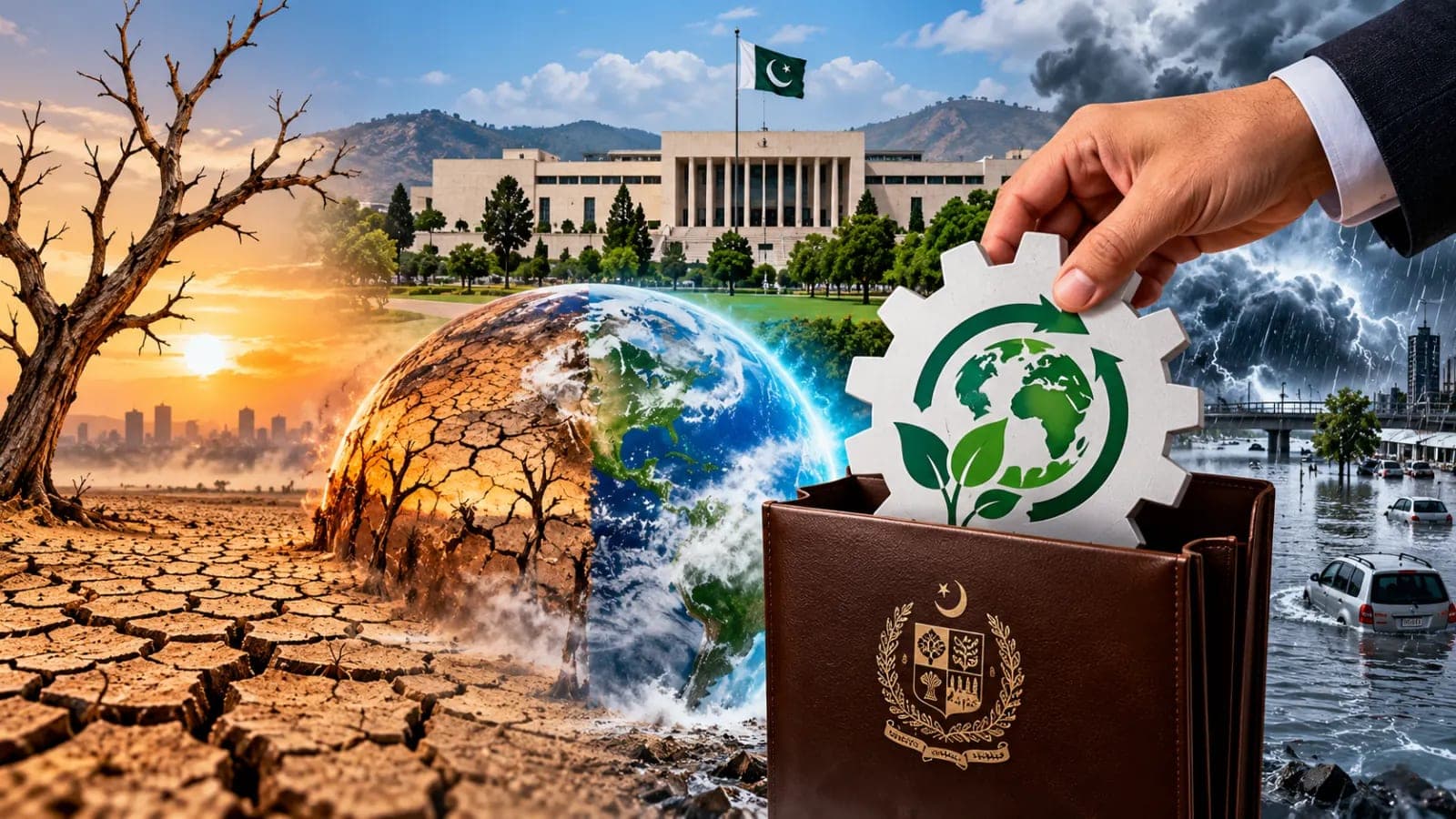
The federal government has proposed major amendments to the Pakistan Climate Change Act, 2017, that would bring the Pakistan Climate Change Authority (PCCA) within a revised administrative framework led by the Ministry of Climate Change and Environmental Coordination.
The proposed legislation, introduced in the National Assembly, seeks to clarify responsibilities between the ministry and the authority while changing the membership, powers and working arrangements of Pakistan's leading climate governance institutions.
Under the proposal, the ministry would retain responsibility for climate policymaking, national coordination and international representation.
The authority would operate primarily as a technical and advisory institution supporting the implementation of climate policies.
The bill also proposes changes to the Pakistan Climate Change Council, including additional representation for Azad Jammu and Kashmir and Gilgit-Baltistan.
The amendments have not yet become law and remain subject to parliamentary approval.
What Is Pakistan Proposing for the Climate Change Authority?
The federal government wants to revise the relationship between the Ministry of Climate Change and Environmental Coordination and the Pakistan Climate Change Authority.
The proposed amendments would place the authority's functions within a clearer ministry-led administrative structure.
The government says the objective is to reduce overlapping responsibilities and improve coordination.
Under the existing framework, both institutions have responsibilities connected to climate policy and implementation.
According to the statement accompanying the proposed legislation, this arrangement has created duplication in some areas.
The bill attempts to define which institution should lead policy decisions and which should provide technical support.
The proposal represents a structural reform rather than the abolition of the authority.
Why the Government Wants to Change the Law
The Pakistan Climate Change Act, 2017, established a legal framework for responding to climate-related challenges.
It created institutions intended to support national planning, coordination and implementation.
However, the government says practical experience revealed overlapping responsibilities between the ministry and the authority.
These overlaps reportedly concern policymaking, coordination and implementation.
Where institutional responsibilities are unclear, decisions can become delayed and accountability may be difficult to establish.
The proposed legislation seeks to address those problems by defining the respective roles more precisely.
Whether the reforms achieve that objective will depend on the final law and its implementation.
Ministry to Retain Central Climate Policy Role
Under the proposed amendments, the ministry would remain the central institution responsible for formulating climate policies.
It would also lead coordination of national climate initiatives and represent Pakistan in international climate forums.
This would establish a clearer division between policy leadership and technical implementation.
The ministry already has an important role in international environmental negotiations and reporting.
Its responsibilities involve cooperation with provincial governments, international institutions and other federal departments.
The proposed framework would formally reinforce that coordinating position.
However, the ministry would still need sufficient technical expertise and resources to perform its responsibilities effectively.
Climate Change Authority to Become Technical and Advisory Body
The Pakistan Climate Change Authority would be redefined primarily as a technical and advisory institution.
Its role would include supporting the ministry in implementing climate-related policies and activities.
Technical institutions can contribute scientific knowledge, project assessments and specialist advice.
Such functions are important because climate policy often involves complex environmental, economic and engineering questions.
However, the authority's practical effectiveness will depend on the powers and resources retained under the final legislation.
A technical body needs access to reliable data and qualified professionals to provide meaningful support.
The proposed change therefore raises questions about how the authority's responsibilities will operate in practice.
Authority Membership Proposed to Increase From Nine to Twelve
The bill proposes increasing the membership of the Pakistan Climate Change Authority from nine to twelve.
The expanded composition would include representation from Azad Jammu and Kashmir and Gilgit-Baltistan.
This could broaden participation in technical discussions and planning.
Both regions face important environmental challenges, including changes affecting mountain ecosystems and water resources.
Their representation may help ensure that climate planning considers a wider range of geographic conditions.
However, additional membership does not automatically guarantee effective representation.
The authority will need clear procedures for decision-making and coordination.
Chairperson's Term Would Be Two Years
Under the proposed legislation, the chairperson of the authority would serve a two-year term.
The prime minister would have the power to grant an additional two-year extension.
This arrangement would establish a defined appointment period while allowing continuity when an extension is approved.
Leadership stability can be important for institutions managing long-term policy issues.
Climate projects often require several years of planning, financing and implementation.
However, effective governance also depends on transparent appointments and clear performance expectations.
The final legislation will determine the precise legal arrangements for leadership and accountability.
Changes Proposed to Pakistan Climate Change Council
The bill also proposes significant changes to the Pakistan Climate Change Council.
The council is the country's apex climate policy institution under the existing legal framework.
It is chaired by the prime minister and brings together senior officials and other relevant participants.
The amendments would change its composition and some of its responsibilities.
The government says these adjustments are intended to strengthen coordination and improve institutional functioning.
Because climate change affects many sectors, council membership can influence how effectively different government departments work together.
Industries and Health Ministers to Join Council
The proposed amendments would add the federal ministers responsible for industries and health to the Climate Change Council.
Their inclusion reflects the relationship between climate change and major areas of public policy.
Industrial activity can affect emissions, energy demand and environmental quality.
Health systems must also prepare for climate-related risks, including heatwaves and changing disease patterns.
Including these ministries could encourage closer coordination between environmental planning and sector-specific policies.
However, the effectiveness of the change would depend on regular participation and practical follow-up.
Membership alone cannot resolve institutional challenges without coordinated action.
AJK and Gilgit-Baltistan to Receive Representation
The proposed council changes would also include the prime minister of Azad Jammu and Kashmir and the chief minister of Gilgit-Baltistan.
This would formally expand participation from regions facing distinctive environmental risks.
Mountain communities are affected by changes in glaciers, precipitation patterns and natural hazards.
Climate adaptation planning must account for local conditions and administrative responsibilities.
Including regional leadership may improve communication between national institutions and affected communities.
The proposal also highlights the need to consider environmental challenges beyond the country's major urban centres.
Non-Official Council Members to Be Reduced
The government proposes reducing the number of non-official members of the Climate Change Council from 20 to 15.
These members would include climate experts, scientists, researchers, academics and representatives of the private sector.
Independent expertise can contribute valuable knowledge to national climate policy.
Researchers may help assess environmental risks, while private-sector participants can provide perspectives on investment and implementation.
Reducing the number of seats could make the council smaller.
However, it could also limit the range of voices represented if appointments are not managed carefully.
The final selection process will therefore be important.
Minimum Council Meetings Proposed to Fall to Once a Year
Another proposed change would reduce the minimum number of Climate Change Council meetings from two annually to one.
Supporters of a streamlined structure may argue that fewer mandatory meetings can provide administrative flexibility.
However, climate policy involves ongoing challenges that often require coordination throughout the year.
Floods, heatwaves and other environmental emergencies do not follow an annual meeting schedule.
A lower statutory minimum would not necessarily prevent the council from meeting more frequently.
Nevertheless, the practical value of the change would depend on whether regular communication and decision-making continue between formal meetings.
Council Could Issue Directions on Forests and Biodiversity
The amendments would expand the council's powers by allowing it to issue directions concerning the protection of forests, wildlife and biodiversity.
These subjects are closely connected to climate resilience and environmental sustainability.
Forests can contribute to carbon storage, ecosystem protection and the management of environmental risks.
Wildlife and biodiversity conservation are also important for maintaining healthy ecosystems.
The proposed authority to issue directions could strengthen national-level coordination.
However, implementation would need to respect the applicable division of responsibilities between federal and provincial institutions.
The exact scope of the council's powers will depend on the final statutory language.
Why Climate Governance Matters for Pakistan
Pakistan faces a range of environmental challenges, including floods, droughts, heatwaves and changing weather patterns.
These risks affect agriculture, water resources, infrastructure, health and livelihoods.
Effective climate governance requires cooperation between numerous institutions.
For example, a flood resilience project may involve environmental experts, disaster management authorities, local governments and infrastructure departments.
Without clear responsibilities, implementation can become fragmented.
The proposed amendments aim to address this coordination challenge at the institutional level.
However, legal restructuring alone cannot replace investment, technical capacity and effective implementation.
Impact on International Climate Commitments
Pakistan participates in several international environmental agreements.
These include the United Nations Framework Convention on Climate Change, the Paris Agreement and other frameworks concerning biodiversity and environmental protection.
Meeting international commitments requires policy coordination, reporting and implementation.
The ministry's proposed central role would reinforce its responsibility for representing Pakistan in international forums.
The authority could provide technical support for those activities.
A clearer division of responsibilities may help avoid duplication in reporting and planning.
Nevertheless, international commitments must ultimately be supported by measurable domestic action.
Could the Changes Affect Climate Funding?
Climate projects often require substantial financial resources.
Funding may come from domestic budgets, international institutions or other approved financing arrangements.
Institutional clarity can be important when preparing proposals and coordinating implementation.
However, the proposed amendments do not automatically provide additional climate funding.
They also do not guarantee approval of future international financing.
The effect on funding would depend on how the restructured institutions manage projects, reporting and accountability.
Transparent governance can support confidence, but financial outcomes require separate evidence.
Questions About Institutional Independence
Bringing the authority more closely within the ministry's administrative framework may prompt questions about institutional independence.
A technical body needs the ability to provide credible advice based on evidence.
At the same time, government institutions need clear lines of accountability and coordination.
The challenge is to establish a structure that supports both objectives.
Supporters may view the proposed arrangement as a way to reduce duplication.
Others may question whether a ministry-led framework gives the authority sufficient operational flexibility.
The final legislation should make the respective powers and responsibilities clear.
Why Provincial Coordination Will Remain Essential
Environmental management in Pakistan involves responsibilities at both federal and provincial levels.
Provinces play important roles in areas such as local environmental regulation, forestry and related public services.
National climate policy therefore requires coordination rather than simply issuing central instructions.
The proposed reforms recognise the importance of cooperation with provincial governments and other stakeholders.
Effective implementation will depend on how federal institutions engage with provincial authorities.
Clear consultation procedures and access to technical information can improve policy outcomes.
What Happens Next in Parliament?
The proposed amendments have been introduced in the National Assembly.
They must complete the applicable legislative process before becoming law.
Parliament may examine the provisions, consider amendments and debate their implications.
Until the necessary approvals are obtained, the existing legal framework remains in force.
The introduction of a bill should not be described as the completion of a legal change.
Further parliamentary proceedings will determine whether the proposed structure is adopted and whether any provisions are revised.
Frequently Asked Questions
1. Is the Pakistan Climate Change Authority being abolished?
No. The proposed legislation would restructure its role and place it within a clearer ministry-led framework rather than abolishing it.
2. What would the Ministry of Climate Change control?
Under the proposal, the ministry would retain the lead role in climate policymaking, coordination and international representation.
3. How many members would the authority have?
The bill proposes increasing the authority's membership from nine to twelve.
4. How would the Climate Change Council change?
The proposal includes additional ministerial and regional representation, fewer non-official members and a lower minimum annual meeting requirement.
5. Have the amendments become law?
No. As of October 17, 2026, the amendments are proposed legislation and remain subject to parliamentary approval.
Conclusion
Pakistan's proposed amendments to the Climate Change Act, 2017, would reshape the relationship between the Ministry of Climate Change and Environmental Coordination, the Pakistan Climate Change Authority and the Climate Change Council.
The government says the changes are intended to eliminate overlapping responsibilities and strengthen institutional coordination.
The proposals include an expanded technical authority, revised council membership and changes to leadership terms and meeting requirements.
However, the reforms remain proposals until they complete the legislative process.
Their long-term value will depend on whether they produce clearer accountability, stronger technical capacity and more effective responses to Pakistan's environmental challenges.
Last Updated: October 17, 2026.
What happens next for national
We will keep this page updated as the story develops rather than publishing a near-duplicate at a new address. Follow National for related coverage.
Get the Verified Brief
One email each morning with the stories we checked overnight.
Spotted an error? Read our corrections policy and tell the newsroom.